
In Longtsunger Village, predominantly inhabited by the Tikhir and Yimkhiung Naga communities, life revolves around the land. Families here depend on maize, kidney beans, Naga Dal, and soybeans – not just as food, but as the backbone of their livelihoods.
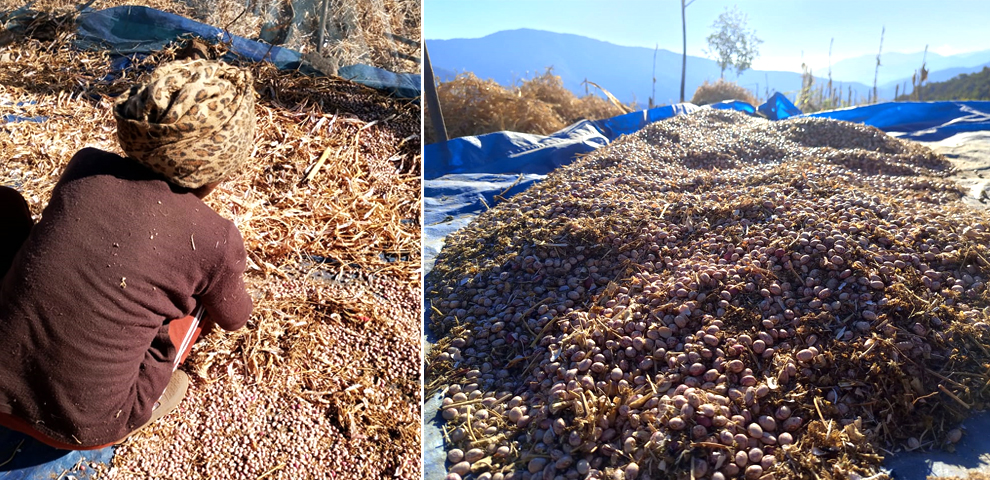
Khiansu, a woman farmer, told Mokokchung Times that every family in the village owns at least one field. Maize is sown between March and May, while kidney beans (Kholar), various Naga Dal (Rice beans), and soybeans are planted in August.
“The crops feed us, but they also help us earn money,” Khiansu said. In the village, one among the families takes responsibility for gathering produce from the others and selling it in bulk to Dimapur, generating income that helps sustain families and even pay school fees.
Kidney beans are a key cash crop. Mixed varieties sell for Rs 1,000 per tin or Rs 50 per kilo, while larger beans fetch Rs 1,100 per tin. Families with more than one field can earn more, giving them a vital economic cushion.
Some villagers even exchange crops among themselves if cash is short, a practice reminiscent of traditional barter, helping families meet immediate needs.
“The income we earn from selling it allows us to sustain our families and pay for children’s education,” Khiansu said.
The approach reflects community cooperation and adaptability, allowing small-scale farmers to reach larger markets and benefit from collective effort.
Longtsunger Village’s farming practices highlight a larger story in Kiphire district where subsistence farming intersects with cash income, and local traditions meet modern economic realities. Despite limited resources, villagers maintain a delicate balance between consumption, trade, and collaboration, showing resilience and innovation in rural livelihoods.
For the people of Longtsunger, agriculture is more than a source of food. It is the heartbeat of the village economy, sustaining families, supporting education, and preserving traditional ways of life.