
The 81st annual session of the Mopungchuket Senso Mungdang was held on January 12 and 13 at ARSA Hall, Mopungchuket, with Rev Dr Wati Aier, Convener, Forum for Naga Reconciliation (FNR), and Emeritus Professor, Oriental Theological Seminary, as the chief speaker.
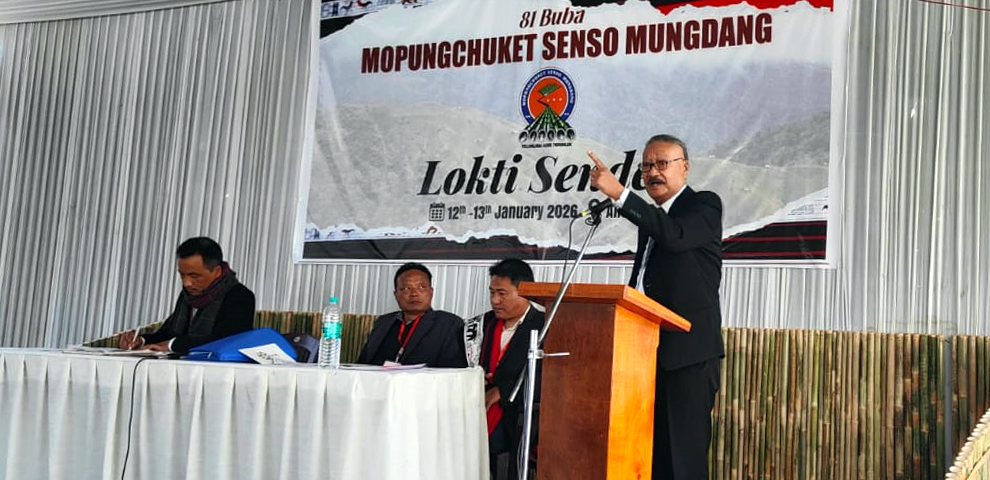
Addressing the Mungdang on January 13, Aier, who also hails from Mopungchuket, urged his fellow villagers to work together for the flourishing of Mopungchuket. He stated that the past cannot be changed, but the future can be shaped with courage, responsibility, and faith.
Aier said that a leader should learn to release oneself from the various chains that bind them, adding that a “released self” knows how to accept criticism and acknowledge weaknesses. A leader encourages mutual existence and respect for the rights of others, he said. He further stated that a leader should also encourage inclusivity and focus on accepting new ideas and the participation of youth and women.
Speaking on the need for restoration and rebuilding of Mopungchuket, he said that a society is not built by leaders alone and that it is the duty of all right-thinking citizens to contribute to its growth. He also mentioned that culture is ontological and alive, and therefore requires change.
“You cannot go forward by looking backward,” he said, adding that a culture that resists change is “dead culture” and one that embraces change is “living culture.”
Aier also asked the villagers, “What should Mopungchuket look like in 25 years?” Saying that imagination is not merely idealism, he emphasized the importance of sociological imagination. He called upon the villagers to do away with self-righteousness and to look at each other and say, “We are all from Mopungchuket.” He urged leaders to self-examine and citizens to work together for the flourishing of the village.
Earlier, on January 12, the Additional Chief Engineer (D&R) and Team Leader for the Nagaland Solar Mission, Department of Power, Government of Nagaland, exhorted the Mungdang.
A major activity of the session included conducting a SWOT analysis of Mopungchuket, tabling agendas and reports, adoption of resolutions, and the appointment of new office bearers.