
385 school leaders to be trained; 249 schools surveyed to guide reforms under NEP 2020-aligned initiative
The Government of Nagaland launched the District School & System Leaders Professional Learning Community (DSSL PLC) at de Oriental Grand, Kohima, marking a major step towards strengthening school leadership and improving learning outcomes across the state’s public schools.
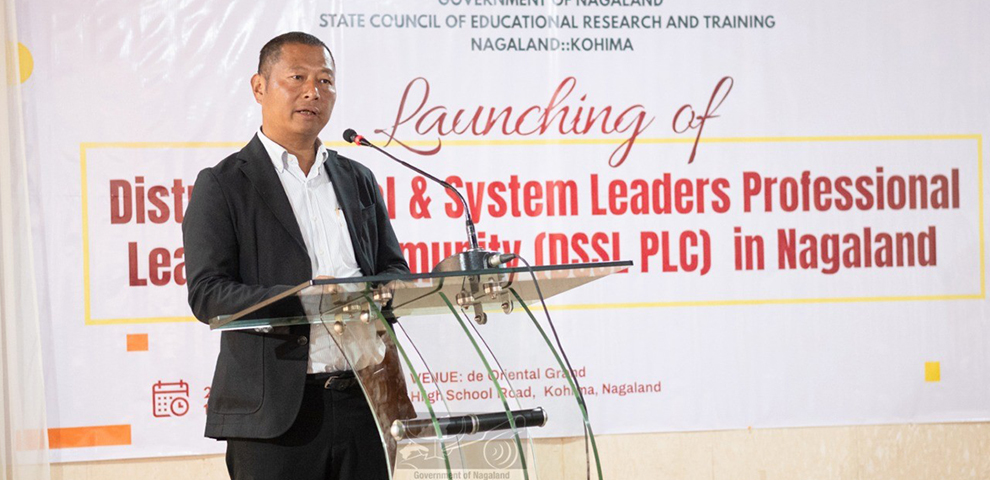
Speaking at the launch, Advisor for School Education and SCERT, Dr. Kekhrielhoulie Yhome, said: “Revitalising government schools remains a priority. Initiatives like the professional learning community will help restore trust and create a more accountable framework.”
The initiative, aligned with the National Education Policy 2020, includes a baseline survey of 249 schools and training for 385 school leaders, covering school heads, senior teachers, and head teachers. The programme aims to foster collaboration, continuous improvement, and accountability among educators while addressing challenges such as infrastructure gaps, human resource shortages, and systemic barriers.
Deputy Director SCERT, Benjung Yaden, noted that the programme builds on the School Leadership Development Programme (SLDP) and provides structured training, research activities, and documentation of best practices. “School leadership is a key factor influencing student learning, and institutionalising such training ensures long-term improvements in education quality,” she said.
Principal Director School Education, Shashank Pratap Singh, added that school autonomy must be exercised with accountability, emphasizing that professional development should translate learning into action rather than delay promotion processes.
International experts also lauded Nagaland’s efforts. Dr. Yogesh Pahariya, Assistant Professor, NCSL, NIEPA, New Delhi, described Professional Learning Communities (PLCs) as a culture where educators learn, discuss, and grow together, improving leadership and learning outcomes across schools.
The launch of DSSL PLC is expected to serve as a catalyst for long-term, sustainable reforms, fostering collaboration among leaders and enhancing public confidence in Nagaland’s education system.