
RIIN and Census in focus
Chief Minister Neiphiu Rio on Friday flagged concerns over Nagaland’s fiscal position while calling for structural reforms and outcome-driven governance, as the Deputy Commissioners’ Conference 2026 began at the Civil Secretariat in Kohima.
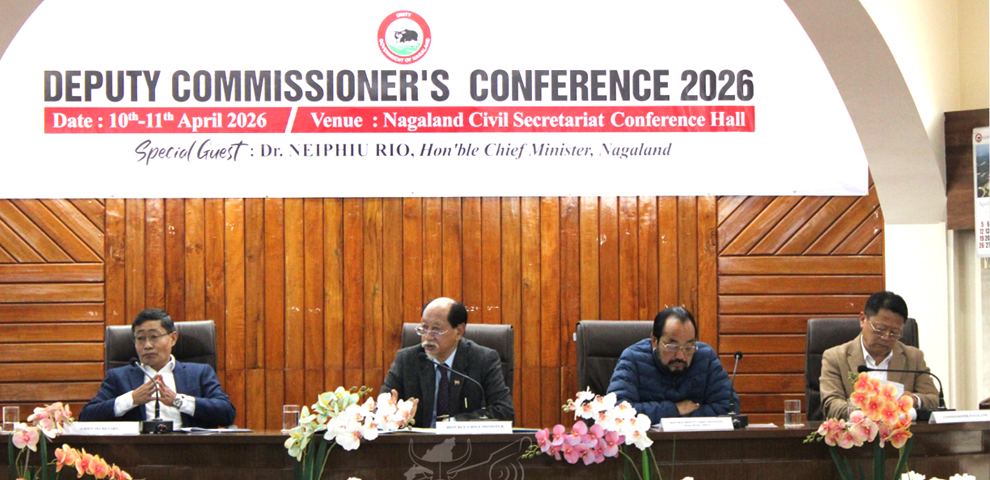
In his keynote address, Rio said the State faces “significant challenges” following the recommendations of the 16th Finance Commission, pointing to a decline in Nagaland’s share of central taxes and the absence of Revenue Deficit Grants for the 2026–31 period. He noted that the State remains heavily dependent on central transfers, with existing revenues insufficient to meet routine expenditures such as salaries and pensions.
At the same time, Rio stressed that governance must become more “citizen-centric, technology-driven and outcome-oriented,” with Deputy Commissioners playing a central role in ensuring effective service delivery.
He said the role of DCs has evolved from being largely regulatory to becoming “facilitative and development-oriented,” requiring stronger coordination across departments and focus on last-mile delivery of welfare programs.
Highlighting the importance of data integrity, the Chief Minister raised concerns over inconsistencies in past Census exercises, stating that “inaccurate or inflated data can severely distort policy decisions.” He informed that Census 2027 will be India’s first fully digital exercise, with houselisting scheduled from July 1–30, 2026, followed by population enumeration in early 2027, and urged district administrations to ensure a “transparent, accurate and credible” process.
On the Register of Indigenous Inhabitants of Nagaland (RIIN), Rio said fresh guidelines issued in September 2024 aim to ensure clarity and transparency in issuing Indigenous Inhabitant Certificates (IIC). He emphasised that only “genuine beneficiaries” should be recognised, with Village Councils and verification committees playing a key role in validating ancestry and documentation.The Chief Minister also highlighted employment and skilling initiatives, noting that over 73,000 applicants are currently registered on the State’s employment live register. He said efforts are being made to link skilling programmes with placements through job fairs and partnerships, including the Nagaland Japan Connect initiative, under which more than 450 youth have registered.
Expressing concern over low participation in public health recruitment, Rio said that out of 1,553 registered doctors under the Nagaland Medical Council, only 193 had applied during COVID-era recruitment drives, indicating a gap between available manpower and public service engagement.
He further called on Deputy Commissioners to work closely with Village and Tribal Councils, describing them as integral to governance in Nagaland, particularly in maintaining law and order and facilitating dispute resolution.
In his opening remarks, Chief Secretary Sentiyanger Imchen said the conference aims to deliberate on governance and developmental issues, with special focus on the upcoming Census operations. He noted that DCs now play a wider role beyond traditional responsibilities, including implementation of centrally sponsored schemes and key state initiatives.
The two-day conference will also deliberate on issues including RIIN, Inner Line Permit (ILP), border affairs, and preparations for Census 2027.