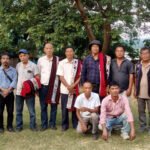

Villagers of Akhoya on Wednesday released an endangered slow loris back into the forest after the animal was found within the village, choosing to return it to its natural habitat in an effort to support biodiversity conservation.
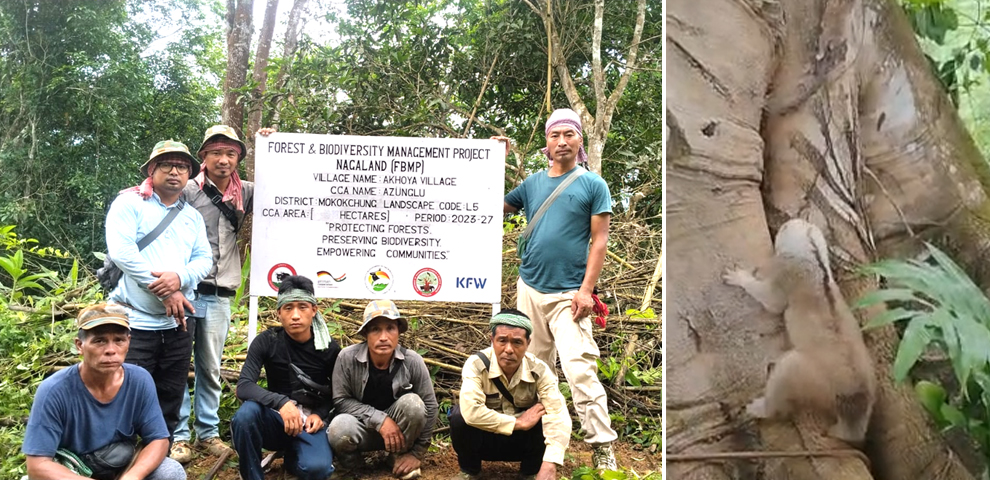
The release was carried out in the presence of officials from the Mokokchung Forest Division. Akhoya is part of the four-village Community Conservation Area (CCA) cluster known as Azüng Lu, which also includes Changtongya Old, Nukshiyim and Unger villages.
According to Satemmongba, a community member, villagers decided to release the animal after recognising it as a rare and endangered species.
“It is an endangered species and is being rarely seen. When the villagers learnt about the slow loris coming to the village, they decided to send it back to the forest,” the member said.
Known locally as “Shinü mongmong”, the slow loris is no longer commonly found in the area, the member added.
The release comes amid ongoing conservation efforts under the Forest and Biodiversity Management Project (FBMP), which is being implemented under the Mokokchung Forest Division in collaboration with KfW-supported initiatives. The project, launched in 2023, aims to protect forests, preserve biodiversity and empower local communities to participate in conservation activities.
Community members said the project has supported several initiatives in the area, including the construction of a community water reservoir and the plantation of indigenous tree saplings. Hunting practices have also been banned within the conservation area as part of efforts to protect wildlife and biodiversity.
The community is additionally planning to create water sources within the forest for wild animals.
The slow loris is listed as endangered on the International Union for Conservation of Nature (IUCN) Red List and faces threats from habitat loss, illegal wildlife trade and demand for traditional medicine.
The incident highlights a growing emphasis on community-led conservation efforts in Nagaland, where village institutions and local communities continue to play a key role in protecting forests and wildlife.
Last month, the Tizu Valley Biodiversity Conservation and Livelihood Network (TVBCLN) rescued an endangered slow loris from Alahuto Colony in Zunheboto and released it into its natural habitat at the Sukhai Community Conservation Area.