
Thomas Sowell once observed, “The first lesson of economics is scarcity: There is never enough of anything to satisfy all those who want it. The first lesson of politics is to disregard the first lesson of economics.”
For years, Nagaland has often been described as a resource-crunched state, with limited revenue generation capacity, geographical challenges and a heavy dependence on central assistance. While these constraints are real to some extent, they do not tell the complete story. The other side of the reality is that the Government of India continues to provide substantial financial support to the state through various schemes and institutions.
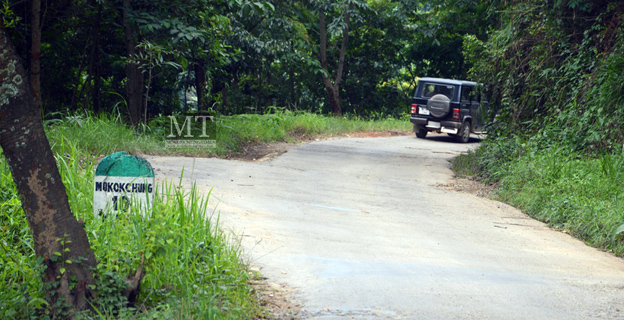
The latest example is the release of Rs 58.96 crore by the North Eastern Council (NEC) for development projects in Nagaland. A major portion of this funding, Rs 48.02 crore, has been allocated for road infrastructure under NESIDS, while other funds are directed towards community infrastructure, skill development, tourism, rural development and tribal welfare. This is only one among many instances of financial assistance extended to the state.
The important question, therefore, is not only how much money Nagaland receives, but how effectively and responsibly these resources are utilised.
Public funds are not merely government funds. They are the hard-earned resources of citizens, entrusted to institutions for the larger public good. Roads, community centres, skill centres and tourism projects have the potential to transform lives, but only when they are implemented with efficiency, transparency and long-term vision.
As Sowell also noted, “It is so easy to be wrong, and to persist in being wrong, when the costs of being wrong are paid by others.” In the case of public expenditure, the costs of poor planning, delays, wastage or ineffective implementation are ultimately borne by the people.
Nagaland’s development challenges cannot be solved by financial assistance alone. Money is a necessary tool, but it is not a substitute for accountability, proper planning and responsible governance. Every rupee allocated for development carries an expectation that it will create lasting value for communities.
As citizens, the responsibility does not end with demanding more funds. It also requires asking difficult questions: Where is the money going? Are projects delivering the intended benefits? Are they being maintained after completion?
A resource-constrained state must be even more careful with the resources it receives. The measure of progress is not the amount of money spent, but the impact created from that spending.