

3.45 lakh forms distributed as of August 20
Duplicate and ineligible entries to be identified; voters urged to verify details
Nagaland is rechecking its 13,57,208-member electoral roll under the Election Commission of India’s Special Intensive Revision (SIR), with the exercise aimed at identifying duplicate, deceased and other ineligible entries while ensuring that eligible voters are included.
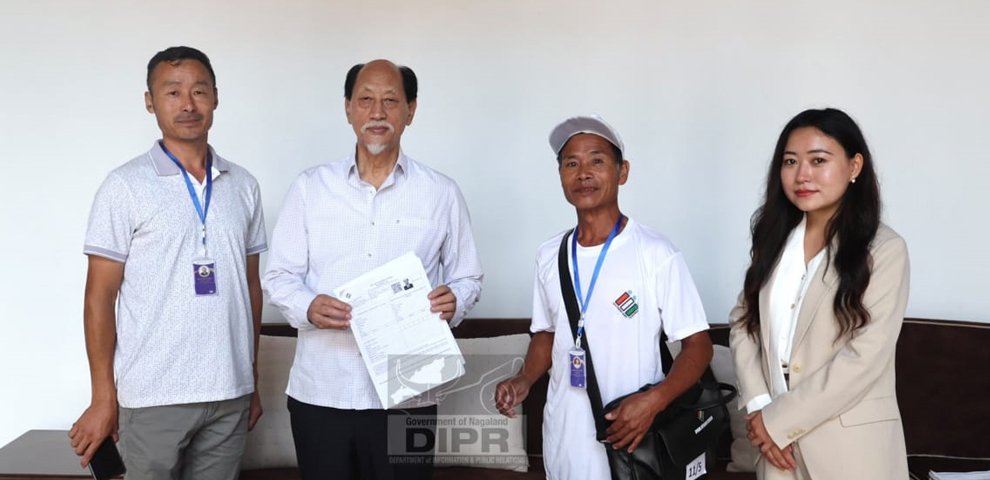
As of 4 pm on August 20, 3,45,233 Enumeration Forms (EFs) had been distributed, covering 25.44% of the State’s electors. Of these, 22,626 forms (1.67%) had been digitised, while 206 EFs had been submitted online by electors, according to the latest status report of the Office of the Chief Electoral Officer, Nagaland.
The house-to-house enumeration is part of SIR Phase III, which is being conducted across 16 States and three Union Territories. The process involves house-to-house enumeration, pre-filled forms and verification of existing electoral data.
For eligible voters, the exercise means ensuring that their details are correctly captured during enumeration and checking the draft electoral roll when it is published.
The pace of distribution picked up sharply between August 19 and 20.
On August 19, 2,31,843 forms (17.08%) had been distributed. The figure rose to 3,45,233 on August 20 – an increase of 1,13,390 forms in a day.
Digitised forms increased from 11,928 (0.88%) to 22,626 (1.67%), adding 10,698 forms to the digitised total.
Longleng has the highest proportion of forms distributed, with 39,872 of its 50,700 electors covered (78.64%).
Meluri follows at 47.80%, while Mokokchung is at 35.81%. Pughoboto has covered 35.12%, Phek 30.15%, Peren 29.41%, Tuensang 28.51%, Kohima 28.13%, Wokha 26.01% and Dimapur 25.08%.
The rates are 21.71% in Tseminyu, 21.54% in Zunheboto, 15.58% in Kiphire, 11.86% in Chümoukedima, 10.39% in Mon and 9.10% in Noklak.
Shamator has the lowest coverage at 1.07%, with 228 of its 21,248 electors covered.
Meluri has the highest digitisation rate at 6.82%, with 1,489 forms digitised.
Dimapur follows at 3.37%, with 4,233 forms digitised — the highest number among the districts. Pughoboto is at 2.57%, Zunheboto 2.55%, Chümoukedima 2.47%, Peren 2.27%, Kiphire 2.20%, Tseminyu 2.03% and Tuensang 1.86%.
Phek has digitised 1.47% of its forms, followed by Mokokchung at 1.40%, Wokha at 1.04%, Kohima at 0.62%, Noklak at 0.81%, Mon at 0.33% and Longleng at 0.19%.
Shamator has digitised four forms, or 0.02%.
Mokokchung sees 17,420-form jump
Mokokchung recorded a sharp rise in distribution between August 19 and 20.
Forms distributed increased from 38,551 (24.66%) to 55,971 (35.81%), an addition of 17,420 forms in a day. Digitised forms increased from 946 (0.61%) to 2,186 (1.40%), an increase of 1,240.
In Kohima, distribution rose from 20,824 (17.02%) to 34,422 (28.13%), while digitisation went from 397 (0.32%) to 764 (0.62%).
Dimapur saw distribution rise from 21,140 (16.82%) to 31,527 (25.08%), with digitisation increasing from 2,276 (1.81%) to 4,233 (3.37%).
Longleng’s distribution rate rose from 64.70% on August 19 to 78.64% on August 20.
House-to-house enumeration by Booth Level Officers will continue until September 14.
The draft electoral roll is scheduled for publication on September 20. Claims and objections can be filed from September 20 to October 20, followed by the notice and disposal process until November 18.
The final electoral roll is scheduled to be published on November 22, 2026, with October 1, 2026 as the qualifying date for the revision.