

A book examining the influence of clan structures on electoral behaviour, leadership and democratic practices among the Lotha Nagas was launched at Fazl Ali College, Mokokchung, on Thursday.
Titled Clans, Identity, and Power Politics: Insights from the Lotha-Naga Electoral Numeric, the book is authored by Dr E. Benrithung Patton, Associate Professor of Political Science at the college. It was released by Prof. Akhil Ranjan Dutta of Gauhati University at the college conference hall.
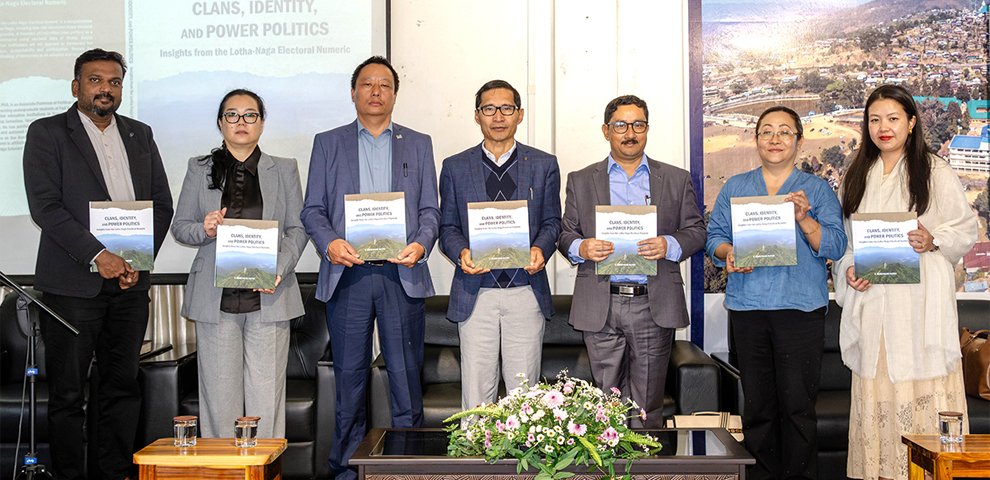
Drawing on electoral data from Wokha district spanning 1964 to 2023, the book examines how clan institutions shape political participation and leadership patterns. It introduces the concept of pfÛchipolitics, or clan politics, as a framework for understanding indigenous governance. The study argues that clan institutions can function as culturally rooted systems of representation, accountability and participation within democratic processes.
Prof. Dutta described the work as a contribution to the discourse on democracy in India, noting its empirical foundation and theoretical insights. Prof. Moamenla Amer, Professor of Political Science at Nagaland University, reviewed the book and described it as an empirical and ethnographic study with considerable academic value.
College Principal Dr I Wati Imchen encouraged academicians to pursue research and scholarly writing, while publisher Sentinaro Longkumer shared the publisher’s note.
Dr Patton described the book as part of his lived experience, drawing on his observations of electoral practices in earlier decades. He said it was intended particularly for younger readers and older generations who had been involved in politics, and welcomed critical feedback to encourage further discussion on the subject.