
Challenges Sümi community to take the lead in promoting electoral integrity
Nagaland’s aspiration for economic self-reliance will remain difficult to achieve without developing its own manufacturing capacity, while electoral reforms must begin with a rejection of money power, S Keoshu Yimchunger, MLA and Advisor for Youth Resources and Sports, said on Friday.
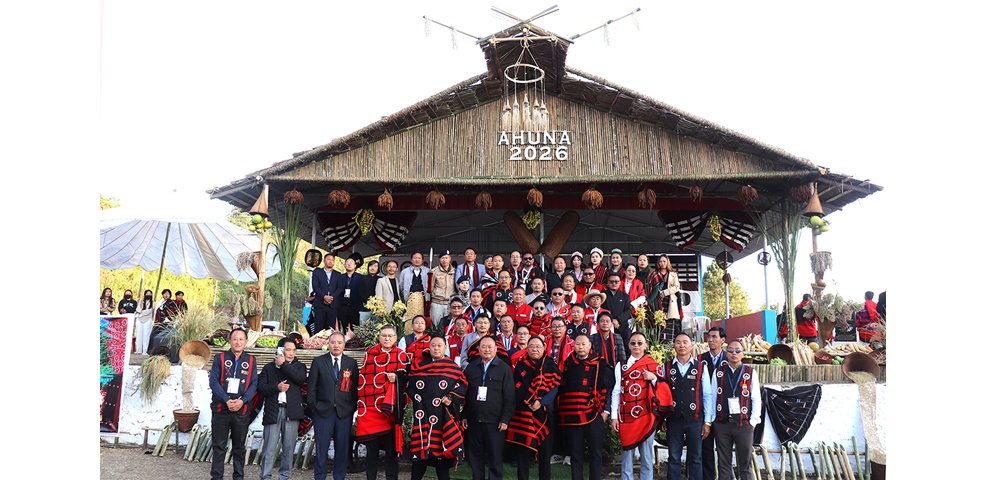
Addressing the second Sümi–Yimkhiung Cultural Exchange at Suruhuto, held as part of the Ahuna cum Mini Hornbill Festival 2026, Yimchunger questioned how Nagaland could build a sustainable economy when the state continued to lack even basic manufacturing industries.
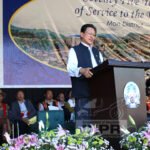
Pointing to the absence of industries producing everyday necessities such as pens and paper, he observed that a substantial amount of economic resources continued to flow outside the state because of its dependence on goods produced elsewhere.
He stressed the need to develop local resources, strengthen economic activities and create opportunities within Nagaland, questioning how the state could achieve economic progress without building its own production capacity.
Turning to electoral politics, Yimchunger challenged the Sümi community to take the lead in bringing about electoral reforms, urging it to ensure that the 2028 elections were conducted without vote-buying and excessive financial influence.
He claimed that the Sümi tribe recorded among the highest election expenditures among tribes in Nagaland and called upon the community to set an example for others by rejecting money-driven electoral practices.
He also urged the Kukamis to share responsibility in promoting clean elections, stating that responsible leadership and electoral integrity were essential for the advancement of the community.
Earlier, Minister for Roads and Bridges G. Kaito Aye called for a shift in Naga political discourse towards the future, urging people to move beyond repeatedly revisiting the Indo-Naga political movement of the 1950s and 1960s and focus instead on the challenges ahead.
“Our focus should not be on revisiting the past again and again, but on preparing and working today for the challenges that lie ahead. It is time we start talking about our tomorrow, where unity remains our only hope,” he said.
Aye also appealed to the Eastern Nagaland People’s Organisation (ENPO) to ensure the fair and equitable distribution of economic packages among all tribes and ministries, stating that balanced development was necessary for communities to progress together.
He further cautioned against the growing influence of money in electoral politics, particularly within the Sümi community, and urged voters to elect representatives based on merit, vision and commitment to public welfare.
The remarks were made during the second edition of the Sümi–Yimkhiung Cultural Exchange, organised by the Sümi Hoho and hosted by the Suruhuto Area Public Organisation, with the Yimkhiung Tribal Council participating as the Special Tribal Guest.
The cultural exchange was held to strengthen the longstanding relationship between the two communities. Sümi Hoho president Dr. Vihuto Asumi said the relationship could be traced back to the 1930s, while recalling that the first cultural exchange programme was held at Chessore on January 16, 2017.
He said the relationship should extend beyond ceremonial gatherings and cultural performances, encouraging regular interaction among the youth, women, churches and tribal organisations of both communities.
Aye, who attended as Ahuna Father, also called for collective action against alcohol and drug abuse among youth, urging families, churches and community institutions to work together to address the challenges.
The Ahuna cum Mini Hornbill Festival 2026 was held on November 8, 13 and 14, with the concluding day’s programme featuring traditional performances and cultural presentations by Sümi and Yimkhiung artistes.