
Ambitious, but success relies on fast and efficient execution
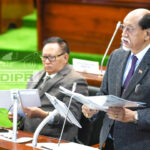
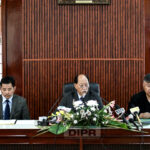
The Ministry of DoNER on Thursday launched and inaugurated projects worth Rs 646.39 crore across Nagaland, marking one of the ministry’s largest multi-sector interventions in the state in recent years. Union Minister Jyotiraditya M. Scindia made the announcements at Phezou Resort, Tuophema, in a program attended by state officials and community representatives.
Five completed projects inaugurated

The Minister inaugurated five completed projects across the Power, School Education and PWD (R&B) departments – sectors that have seen repeated calls for investment due to persistent service gaps.
- Upgrade of the 132 kV sub-station at Nagarjan, Dimapur (Rs 24.46 crore)
- In-Service Teachers Training-cum-Examination Centre with residential facilities (Rs 20 crore)
- Implementation of IT infrastructure in 190 schools (Rs 18.95 crore)
While the IT upgrades aim to modernize classrooms, rural schools may still face challenges due to unreliable electricity and connectivity.”
- Upgradation of the Chendang Saddle–Noklak Road (Rs 45.59 crore)
- Improvement of AT Road from Tsusangra to Impur Junction, including bridges (Rs 93.98 crore)
These stretches are among the few major completed road projects in eastern Nagaland, where several DoNER-funded roads continue to face delays.
Foundation stones for eleven new projects
The Union Minister also laid foundation stones for eleven new projects across Health, Sports, IT, Power and Roads – most of them multi-year constructions.
- Multi-speciality Hospital at Chümoukedima (Rs 58.72 crore)
- 50-bedded hospital at the new Peren District Headquarters (Rs 44.65 crore)
Both projects respond to the long-standing shortage of secondary and referral health facilities outside Kohima and Dimapur.
- Kohima Multi-disciplinary Sports Centre at IG Stadium complex (Rs 72.59 crore)
The state lacks major indoor sports infrastructure, and the proposed centre is expected to host training programs and competitive events.
- Nagaland Innovation Hub for Startups (Rs 19.57 crore)
The Hub is intended to support entrepreneurship and digital skilling in a state where startup ecosystems remain nascent.
- 1.5 MW Dzuna Small Hydro Project (Rs 22.80 crore)
- PWD (R&B) – Seven new road projects (over Rs 225 crore)
These include:
- Road from Jalukie to the New DC Complex Township
- Road to Old Peren via Chalkot Junction
- Phomching HQ–Longding HQ road
- Thizama–Chiethu Airport connectivity road
- Khonoma–NH-29 improvement
- Coco Road Emlomi–Ghukiye Junction
- Additional internal links in Peren and Mon districts
Minister’s speech: claims, regional framing and future plans
In his address, Scindia described his two-day visit as “official and deeply personal,” recalling his father’s 1992 visit. He said the Northeast was no longer “the last frontier, but the first frontier of India,” citing cumulative regional improvements in connectivity.
He claimed:
- Airports in the Northeast increased from 9 to 17 in eleven years
- Weekly air traffic movements rose from 900 to over 2,000
- Rs 6.02 lakh crore invested across the Northeast by 52 Union ministries
- Nagaland’s tax devolution increased from Rs 5,505 crore to Rs 37,000 crore
- Grant-in-aid nearly doubled to Rs 65,000 crore
While these figures reflect regional trends, several airports in the Northeast continue to face operational limitations, including short runways and limited weekly flights.
Scindia also announced work on the Dimapur–Kohima–Kisama–Dzükou tourism circuit, following similar circuits in Meghalaya and Tripura, and expressed support for promoting Naga Coffee as a global brand.
He further announced the formation of eight high-level regional task forces, each chaired by a Chief Minister or Governor.
Chief Minister Neiphiu Rio said the event highlighted progress under Central schemes such as NESIDS-OTRI, NESIDS-Roads, and PM-DevINE. He welcomed the task forces and said he was honoured to be appointed Convenor of the Task Force on Handlooms & Handicrafts. While connectivity, services, and livelihoods have improved, several sectors still require deeper investment and sustained monitoring.
If implemented effectively, these projects could strengthen mobility, health access, teacher training, digital infrastructure, and renewable energy capacity across the state. However, given Nagaland’s history of project delays and execution bottlenecks, the public impact will depend on transparent timelines, quality control, and regular monitoring.