
The scheduled visit of American evangelist Rev Franklin Graham to Nagaland has been cancelled after he was denied a visa, officials from the Kohima Baptist Pastors Fellowship (KBPF) confirmed on Friday.
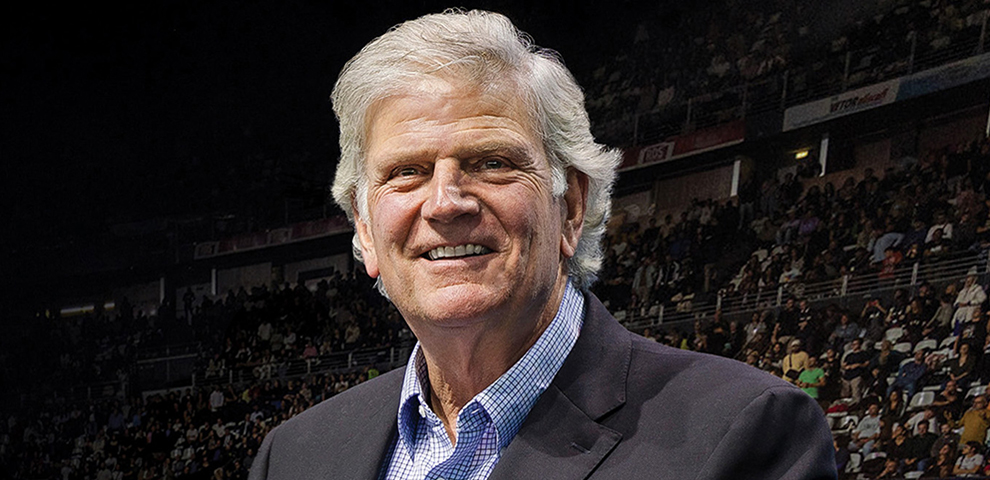
Rev Dr Ruokuovilie Sachü, President of the Fellowship, and Dr SN Among Jamir, Secretary, KBPF, in a statement informed that Rev Robert Cunville, an associate of the Billy Graham Evangelistic Association, will deliver the sermon at the event on November 30 at the Indira Gandhi Stadium in Kohima. Gates will open at 2 pm.
Rev Franklin Graham, son of the late evangelist Billy Graham, had been invited to speak at a Christian gathering expected to draw thousands. No formal reason for the visa denial has been issued by the Ministry of Home Affairs.
Congress condemns Centre, alleges discrimination
Reacting sharply, the Nagaland Pradesh Congress Committee (NPCC) issued a statement accusing the BJP-led Central government of “discrimination” and “targeting religious minorities” by denying Graham an entry visa.
Calling the move “an assault on Christian faith,” the NPCC said the decision had “deeply hurt” the people of Nagaland, where over 85% of the population is Christian.
The NPCC also criticised alliance partner Naga People’s Front (NPF) for “silence” on the matter, alleging that the party had “failed to intervene despite being part of the ruling coalition.” The party demanded the resignation of BJP MLAs from Nagaland, saying they had “lost the moral right to represent the state.”
“This incident has made it clear that the NPF and the BJP MLAs are mere puppets, unable and unwilling to stand up for the rights and faith of the people they claim to represent. They are complicit in this insult to the Naga community,” stated the NPCC.
There has been no official response from the Ministry of External Affairs or the Ministry of Home Affairs on the visa denial. Visa refusals to foreign religious leaders in India are not uncommon and are typically not publicly explained by the government.
Franklin Graham has previously faced visa restrictions and cancellations in other countries – notably in the United Kingdom – where objections were raised to his public statements on Islam and LGBT issues. It is not clear whether those controversies or related concerns played any role in India’s decision to deny him a visa. The incident also comes amid ongoing national debates on religious freedom and allegations of rising intolerance raised by several civil society and political groups.