
In a major policy move centred on oil and natural gas, the Nagaland Cabinet has decided to proceed with the exploration and potential exploitation of petroleum resources in the State following the withdrawal of a court case that had stalled the issue for years.
Announcing the decision on Wednesday, Minister for Parliamentary Affairs and Power KG Kenye said the matter had become contentious after it was taken to court by a local organisation, rendering the issue sub judice. With the petitioner now withdrawing the case – making it infructuous – the Cabinet has resolved to move forward “basing on our rights as guaranteed in the Constitution.”
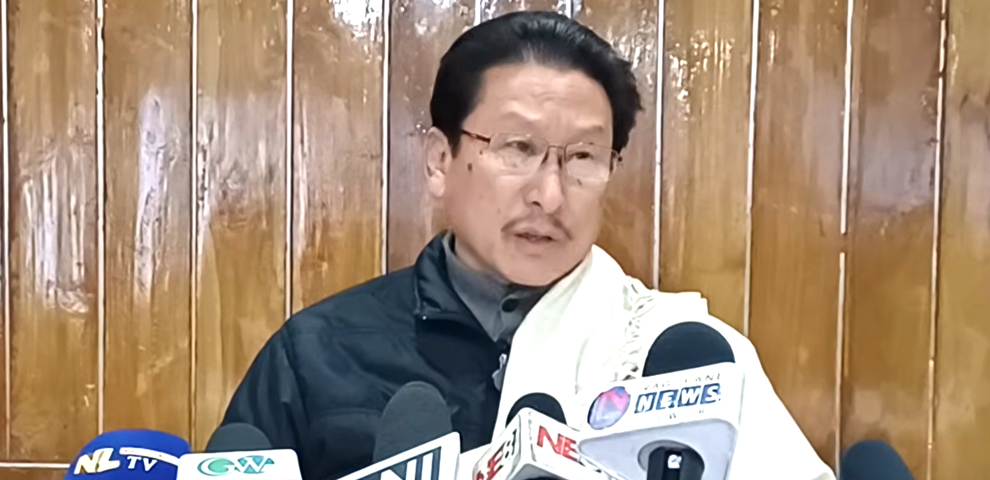
Kenye said the State had waited for the outcome of legal proceedings before taking a final decision. “We were waiting for the final verdict. Now that the matter has been withdrawn and the parties have arrived at an understanding among themselves, the Cabinet has decided to go ahead with our venture to explore and exploit our natural resources,” he said.
Framing the decision within Article 371(A), the minister asserted that land and its resources belong to the people of Nagaland, setting the State apart from others where petroleum and natural gas fall under the Union domain. He said that while central laws place petroleum in the Union List, Nagaland’s constitutional protections recognise local ownership of resources.
“At the same time, it should not go against the interests of the Centre or any standing order,” Kenye added, noting that any future exploration would proceed with the consent of landowners.
Alongside the Cabinet’s resource decision, a sub-committee under the Political Affairs Committee (PAC), chaired by Chief Minister Neiphiu Rio, has been constituted to handle negotiations on key political issues including the proposed Frontier Nagaland Territory Authority (FNTA), the Free Movement Regime and the Protected Area Permit.
A joint delegation comprising State leaders and Eastern Nagaland People’s Organisation representatives is scheduled to meet Government of India officials on February 5, with the State expressing hope for a significant announcement.
According to Kenye, the government is also preparing new directives on non-cadastral and government-occupied lands where individual pattas have not been issued. Under the proposed framework, registered occupants may be required to pay revenue to the State in a manner similar to other landholders, he said.