
A 10-day ICAR-sponsored short course on “Climate-Smart Agriculture: Tools and Techniques for Biotic and Abiotic Stress Management” was inaugurated on March 18 at the Medziphema Campus of Nagaland University.
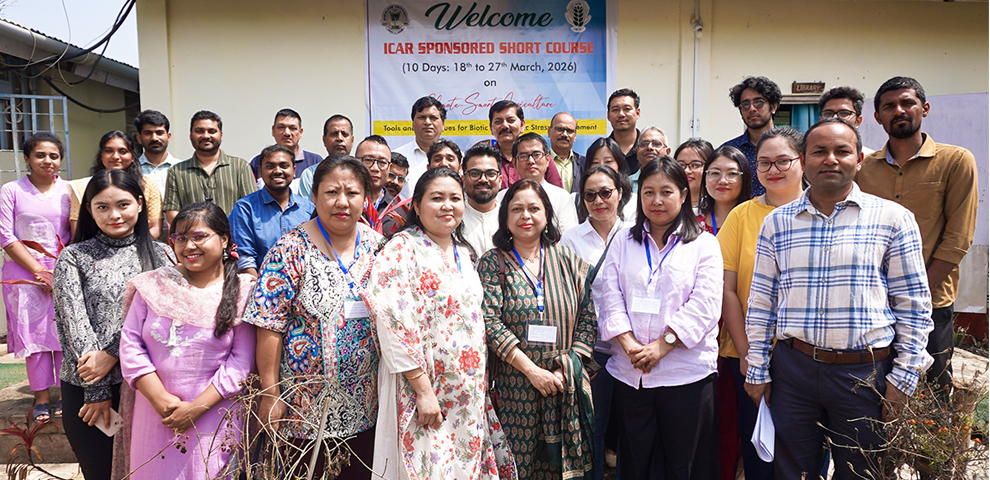
Organised by the Department of Genetics and Plant Breeding under the School of Agricultural Sciences (SAS), the programme will be conducted from March 18 to 27 with support from the Agricultural Education Division of the Indian Council of Agricultural Research (ICAR).
Emphasising the urgency of addressing climate change, Course Director Prof. H. P. Chaturvedi highlighted the objectives of the course and stressed the importance of climate-resilient agriculture. He said the programme aims to equip agricultural professionals, including scientists, assistant professors and associate professors in agriculture and allied sciences, with tools and techniques to cope with emerging challenges.
He noted that the course focuses on three key aspects of climate-smart agriculture: productivity, adaptation and mitigation, including improving crop resilience to drought, heat and floods, and reducing greenhouse gas emissions.
Prof. Chaturvedi added that the course combines theoretical and practical learning, including field visits, to provide hands-on exposure.
The programme began with an invocation, followed by the ceremonial lighting of the lamp. A felicitation ceremony was held for the chief guest, Prof. V.K. Vidyarthi, In-charge Pro Vice-Chancellor, SAS, along with Prof. K.K. Jha, In-charge Dean, SAS; Prof. H.P. Chaturvedi; and Dr. Anthony, Deputy Registrar.
Prof. K.K. Jha highlighted the importance of such training programmes in strengthening academic and research capacity. Prof. V.K. Vidyarthi underscored the need to adopt climate-smart strategies and encouraged active participation.
Technical sessions featured expert lectures by Prof. Bireswar Sinha on integrated disease management, Dr. Amod Sharma on climate change and food security, and Dr. S. Naresh Kumar of IARI on adaptive agricultural strategies.
The programme witnessed active participation from students, researchers and professionals.