
Issues highlighted during NPF Zunheboto 35 AC office bearers’ visit; hostels unused, basic facilities missing
A government teacher training institute in Zunheboto district is functioning without adequate electricity, water supply and essential infrastructure despite shifting to a newly constructed campus last year, raising concerns over the future of teacher education in the district.
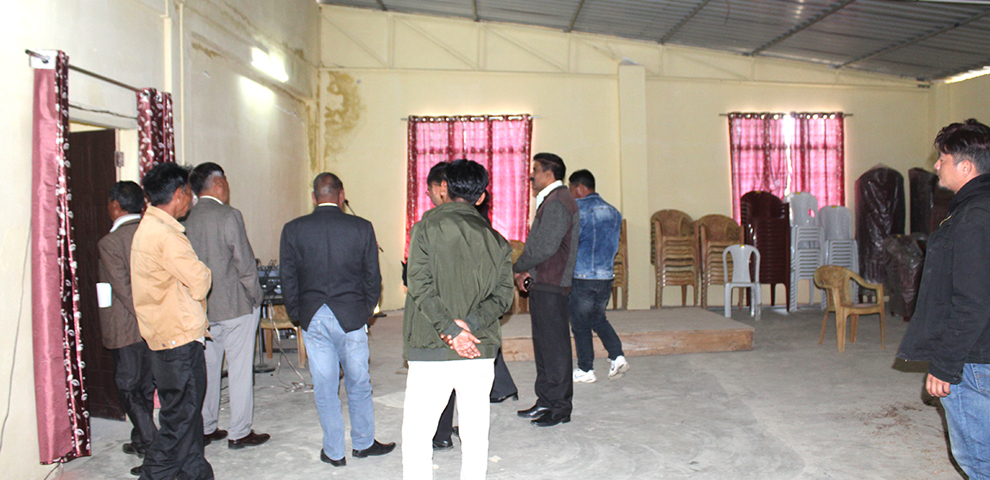
The issues came to light during a visit by office bearers of the Naga People’s Front (NPF), Zunheboto 35 Assembly Constituency, to the District Institute of Education and Training (DIET) Centre on February 10, where they observed multiple shortcomings affecting daily operations and student intake.
During the inspection, the team noted inadequate electricity and water connectivity, along with structural concerns in the administrative building. Staff reported that rainwater leaks into rooms during heavy rainfall due to poor ceiling conditions.
Although the institute recently shifted to its new campus after nearly 12 years of delayed construction, the lack of basic utilities continues to hamper functioning. The Centre currently relies mainly on solar power, while an existing electricity connection was described as insufficient to meet operational needs.
The DIET Centre has a sanctioned intake capacity of 50 students for its two-year pre-service teacher training program. However, enrolment has declined significantly over the years, with only nine students registered in the current academic session, compared to 20 students last year. The next academic session is scheduled to begin in August.
Staff indicated that poor infrastructure and logistical challenges have contributed to reduced interest among prospective trainees.
Separate hostels for boys and girls remain vacant due to the absence of electricity, water supply and basic amenities. The lack of appointed wardens has further prevented the use of hostel facilities.
Furniture from the hostels is currently being utilized in the institute’s library, which reportedly has limited resources and books and was established largely through staff contributions.
Students from remote areas face transportation difficulties, as commercial vehicles do not operate regularly near the institute, which is located at a distance from the main town. The underdeveloped approach road has also been cited as a major obstacle, with staff raising security concerns due to its shared use by nearby residents.
The DIET Centre is also facing manpower shortages, with only around 13–14 faculty members, including the Principal and Vice Principal, alongside over 20 non-teaching staff. Of the available staff quarters on campus, only one is currently occupied.
Meanwhile, two batches under the Hindi group are scheduled to commence on February 17 as part of the ongoing two-year teacher training program.
The DIET Centre was initiated in 2012 under late MLA KC Nihoshe but remained incomplete for several years due to stalled construction. Work resumed during 2021–2022 under then Advisor for School Education and SCERT, K.T. Sukhalu, leading to the institute’s relocation to the new campus last year.
Despite the progress in infrastructure development, staff say the absence of reliable electricity, water supply and essential facilities continues to hinder effective training, raising concerns about the sustainability of teacher education programs in the district.
(Agencies)