

National People’s Party (NPP) national vice president Vevoyi Wideo D Vadeo has described the Nagaland Liquor Total Prohibition (NLTP) Act, 1989, as a “dead law” and alleged that its enforcement mechanism has failed to prevent the illegal liquor trade in the state.
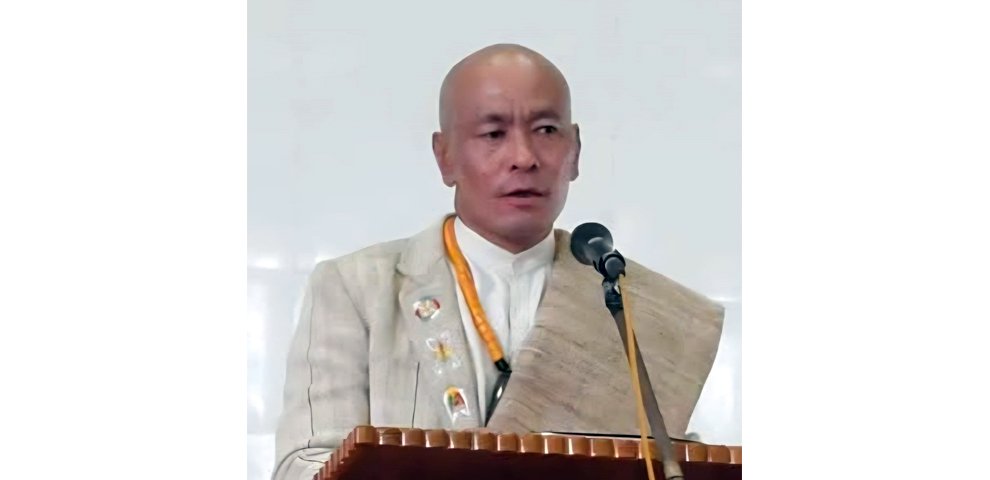
In a social media statement titled “NLTP ACT: A DEAD LAW IN NAGALAND”, Vadeo accused the Nagaland government of misleading the public through liquor seizure exercises without ensuring effective prosecution and convictions.
“Govt. of Nagaland, please STOP fooling the public with Seizure Dramas when the Act itself cannot convict the violators,” he stated, alleging that the law had created conditions favourable to the black market rather than ensuring prohibition.
Vadeo’s criticism centred on Section 43 of the Act, which restricts courts from taking cognizance of offences unless a complaint is made by the Director of Prohibition or an authorised officer.
Citing a Gauhati High Court, Kohima Bench order dated November 25, 2024, he said the provision had created difficulties in prosecuting NLTP cases based solely on police chargesheets without the required complaint under Section 43.
“An Act that provides for 3 years of imprisonment has become Non-Cognizable in practice. Seizure happens, photo-op happens, liquor is back in the same shop next day. No conviction, no fear,” Vadeo stated.
He further alleged that the law’s enforcement shortcomings had protected illegal liquor businesses, describing the situation as a failure of the prohibition system.
Vadeo said the debate should not be limited to whether the prohibition law should be lifted or retained, but should also address the government’s responsibility to enforce it effectively.
He questioned whether the government would continue the ban while ensuring proper rules, adequate manpower and convictions, or acknowledge the law’s shortcomings and consider lifting it.
In a separate social media post, Vadeo held the state government responsible for the recent deaths reportedly linked to suspected spurious liquor consumption in Mokokchung and Tuensang districts.
“The blood of 23 people who died due to alcohol is on the hands of the Nagaland Government,” he alleged.
He claimed that alcohol remained freely available in towns and villages despite the prohibition law and criticised the government for what he described as inadequate enforcement and a lack of accountability.
“Even after 23 precious lives lost, there are only namesake seizures and hollow statements for the camera. No real action, no accountability,” he stated, demanding answers over the deaths.
Vadeo also questioned why illicit liquor continued to circulate despite seizures and other enforcement measures, alleging that Nagaland was a dry state “only on paper”.
His statements come amid reports of 23 deaths in Mokokchung and Tuensang districts suspected to be linked to the consumption of spurious liquor. Three deaths in Longpayimsen village on October 15 and 16 were also suspected to be associated with methanol poisoning.
The reported deaths have intensified calls for accountability and a review of the implementation of the NLTP Act.
The Mokokchung Town Lanur Telongjem (MTLT) has called for a comprehensive, evidence-based review of the law, while the NPP has demanded a transparent investigation into the deaths.
The Nagaland State Human Rights Commission (NSHRC) has also taken suo motu cognizance of the matter and directed the Chief Secretary, Director General of Police, and the Excise and Health departments to submit reports within four weeks.
Meanwhile, forensic reports have confirmed the presence of methanol in seized liquor in Tuensang, according to the information provided. Police have seized nearly 3,000 bottles and arrested 19 persons, while a Special Investigation Team (SIT) headed by an Additional Superintendent of Police is investigating the alleged supply chain.
The allegations concerning the government’s responsibility, the effectiveness of the NLTP Act and the prosecution of violators are Vadeo’s stated positions. The reported deaths and ongoing investigation have renewed scrutiny of the state’s prohibition framework and its implementation.