

The NSCN-IM has said the recent meeting between Prime Minister Narendra Modi and Myanmar leader Min Aung Hlaing marks a significant geopolitical development that could reshape the future of the Naga political issue and alter the dynamics of the ongoing peace process.
In a political analysis titled “Modi–Hlaing Talks and the Naga Political Future: A Deeper Strategic Analysis” published in the latest edition of its monthly bulletin Nagalim Voice, the organisation said the discussions between the two leaders extended beyond routine diplomatic engagement and reflected a broader strategic convergence on border security and regional stability.
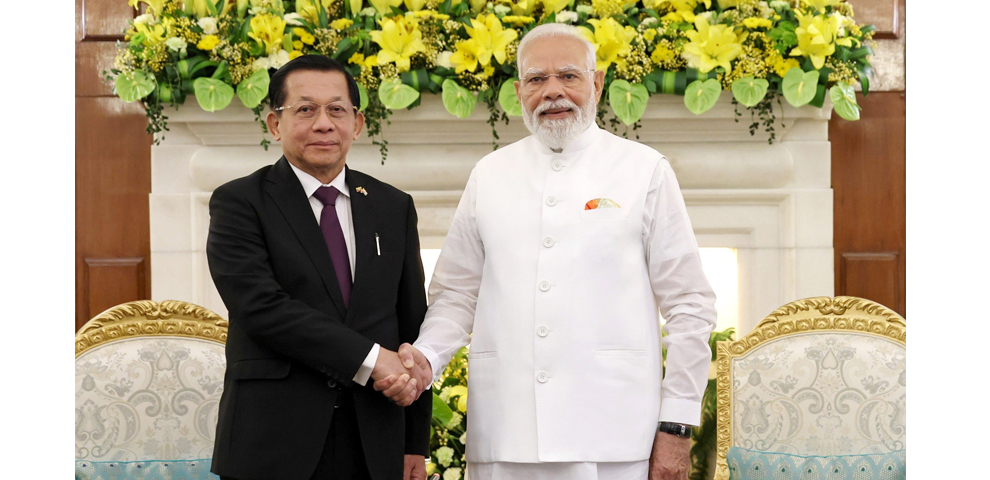
According to the NSCN-IM, Myanmar’s assurance that its territory “would not be allowed to be used against India’s security interests” carries important implications for the Naga political movement, whose historical presence spans both sides of the India-Myanmar border.
It said closer security coordination between the two countries could gradually reduce the cross-border space that had long influenced the movement’s political and military strategy.
The bulletin maintained that the Naga issue has never been merely an internal matter of India, noting that Naga communities are spread across present-day Nagaland, Manipur, Arunachal Pradesh, Assam and northwestern Myanmar. It said this transnational character has shaped the movement since its inception and distinguished it from other regional conflicts.
The NSCN-IM further said India’s approach towards the Northeast has increasingly shifted from counter-insurgency to one driven by wider geopolitical considerations. It cited regional connectivity projects, border infrastructure, the Act East Policy and strategic competition with China as factors that have elevated the importance of stability along the India-Myanmar frontier.
Against this backdrop, the organisation said New Delhi’s negotiating position could strengthen as closer cooperation with Myanmar limits insurgent movement and logistical networks across the border. It also suggested that the Centre may seek to conclude the long-pending Naga political issue through a settlement that emphasises administrative and cultural safeguards while avoiding major constitutional changes.
Referring to the unresolved demands for a separate Naga flag and constitution, the NSCN-IM said these remain central to the political dialogue as symbols of Naga identity and historical sovereignty. However, it observed that the present political climate in India makes significant constitutional concessions increasingly unlikely.
The bulletin also cautioned that changing regional realities could deepen differences within the wider Naga political movement, with varying views emerging over the course of future negotiations.
On the regional front, the NSCN-IM said China’s growing influence in Myanmar has added another strategic dimension to India-Myanmar relations, making security cooperation part of a broader geopolitical contest in the Indo-Pacific.
The organisation also pointed to changing aspirations among younger Nagas, saying issues such as employment, education, infrastructure and economic opportunities are increasingly shaping public discourse alongside long-standing political aspirations.
Concluding the analysis, the NSCN-IM maintained that while geopolitical realities are changing, the fundamental questions surrounding Naga identity, sovereignty, dignity and self-determination remain unresolved. It said a durable solution would depend on whether any future settlement is able to reconcile those aspirations with the realities of contemporary state politics.