
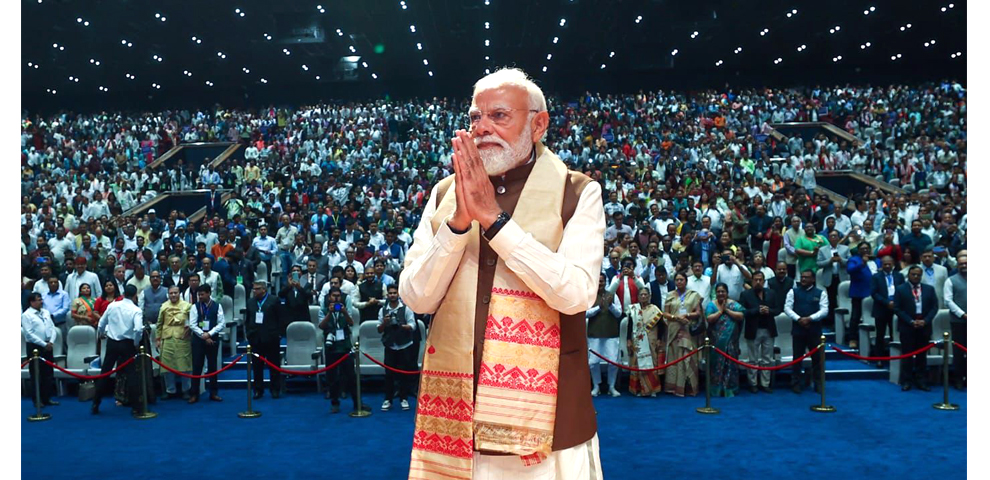
Prime Minister Narendra Modi on Friday inaugurated an elevated road corridor connecting the Pandu Port Complex on the Brahmaputra River to National Highway 27 (NH 27) in Guwahati, Assam, built at a cost of Rs 180 crore. Experts say the development could reshape logistics and trade dynamics across the Northeast, including Nagaland, by improving multimodal connectivity and reducing transport inefficiencies.
The corridor provides direct access from the inland river port to NH 27, bypassing city congestion in Guwahati. According to the Inland Waterways Authority of India (IWAI), Pandu Port handles over six lakh tonnes of cargo annually, including fertilisers, construction materials, and containerised goods. Until now, trucks moving cargo to the national highway had to navigate crowded urban streets, adding time and cost.
For Nagaland, a landlocked state with no port of its own, the corridor is especially significant. All cargo from Nagaland moves via Assam, using connecting highways such as NH 129, NH 29, and NH 702 to reach NH 27. Rail freight from Nagaland is only beginning, with Molvom station handling initial consignments of cement and stone chips; volumes remain modest compared with other Northeastern states. There is currently no official data on how much of Nagaland’s cargo moves on NH 27, but given the state’s dependence on Assam’s transport network, smoother and faster access through the corridor directly benefits its trade. Traders and manufacturers across the region have long faced delays and higher costs because of congestion in Guwahati – a challenge this corridor seeks to address.
Data from IWAI underscores the broader potential: roughly 49 million tonnes of cargo move in and out of the Northeast annually, of which about 8 million tonnes could shift to inland waterways with improved infrastructure. Of this, 3 million tonnes originates and terminates within the region, highlighting the opportunity to reduce pressure on roads and lower logistics costs. NH 27, India’s longest east-west highway, forms the backbone of this multimodal network, linking the Northeast to national markets and integrating river, road, and eventual rail transport. It may be noted that NH 27, India’s longest east–west national highway, runs across all major Northeastern states and connects them to the national road network.
Union Minister for Ports, Shipping and Waterways Sarbananda Sonowal said, “The Brahmaputra is no longer just a river; it is becoming a highway of opportunity for millions.”
Prime Minister Modi added, “Assam is today becoming a model for the new future of our Northeast. The progress here is giving new momentum to the entire Northeast. These projects will also create jobs for youth, artisans, boat operators, traders and those working in hospitality and transport sectors.”
The corridor represents a direct boost to trade efficiency and growth for Nagaland. By reducing delays at Guwahati, it lowers costs for manufacturers, farmers, and traders, while making river-based freight a more viable option. Combined with rail freight from Molvom, this might be the first step toward an integrated logistics network that could transform how goods move in and out of the state.