

KVK advisory meet calls for conservation push, indigenous crop focus, stronger field support
The rare indigenous Sumi Ne (Sumi goat) is facing a critical population decline, prompting calls for urgent conservation measures and dedicated funding support, during the 16th Scientific Advisory Committee (SAC) meeting of the ICAR Krishi Vigyan Kendra, Zunheboto held at Nagaland University on Monday.
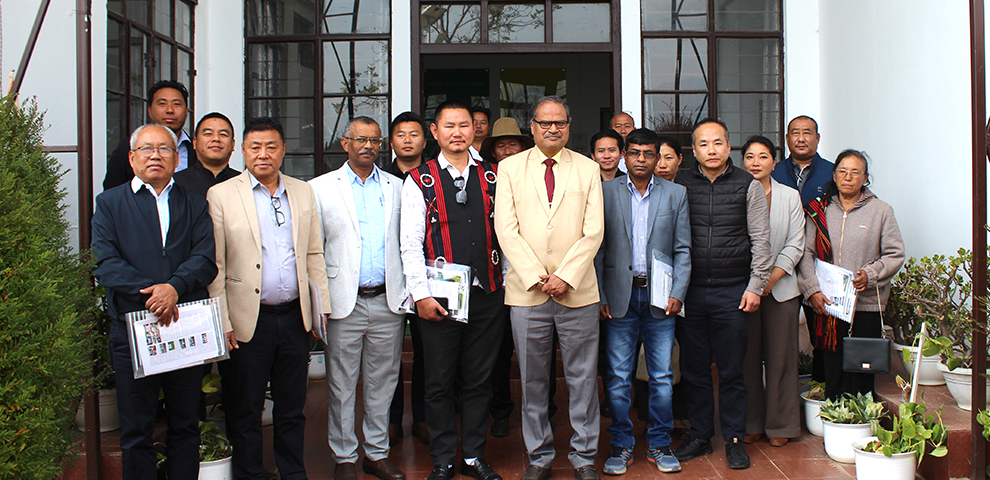
Representatives from the School of Agricultural Sciences (SAS) informed that only a few Sumi goats remain in high-altitude areas such as Satakha and Keltomi. The long-haired indigenous breed, traditionally valued by the Sumi community for its natural fibre used in jewellery, is now at risk as farmers are increasingly reluctant to rear it due to crop damage, fencing challenges and low commercial returns.
Vice-Chancellor Prof JK Patnaik described the decline as serious and stressed the need to conserve indigenous genetic resources. While modern technologies, including artificial intelligence, are entering agriculture, he said preserving traditional breeds must remain a priority even if large-scale commercialization is not immediately viable.
The meeting resolved to explore funding avenues, including support from the National Bank for Agriculture and Rural Development (NABARD), to undertake conservation and experimental initiatives in cooler hill zones where the breed is uniquely found.
Farmers also flagged growing human-wildlife conflict, with elephants frequently entering agricultural fields and destroying crops. Members linked the incursions to floods in Assam and large-scale forest exploitation in Nagaland, which have disrupted wildlife habitats and pushed animals into farming areas.
Kakuto Assumi of Litami village highlighted irrigation problems and difficulties in coffee plantations, while other farmers stressed the need for sustained technical follow-up after initial interventions.
A fruit scientist from the Horticulture Department noted that citrus crops across the Northeast are facing a “complex decline” and suggested greater emphasis on minor fruits and vegetables. He observed that Nagaland’s climate is comparable to Ethiopia’s and suitable for high-quality coffee production, provided proper processing systems are developed to enhance market value.
Members also recommended shifting focus toward indigenous crops better suited to local agro-climatic conditions, noting that rabi soybean has not performed successfully in the state.
Speakers emphasized integrated farming systems as critical for districts with limited land and cropping constraints. Farmers called for increased focus on animal husbandry, citing the prevalence of livestock diseases and the need for more training in animal health management.
Highlighting livelihood gains from KVK interventions, H Ghukhali Sema of Naghuto village shared that after undergoing value-addition training in 2018 – including preparation of jackfruit chips, tomato pickle and wine – she now earns approximately Rs 40,000 annually. Another farmer from Khrimito village said assistance in piggery, poultry and food processing has contributed to village incomes.
Chairman of the Farmer Producers Organisation (FPO), Zunheboto, L Holuto Ayemi acknowledged KVK’s outreach to remote villages nearly 90 km away but called for expanded funding to widen coverage and ensure sustained impact.
The meeting reviewed the Action Taken Report of the previous SAC session, the Annual Progress Report for 2025 and the Annual Action Plan for 2026, inviting suggestions on technologies suited to Zunheboto’s agro-climatic conditions.
The Vice-Chancellor commended KVK’s outreach efforts and reaffirmed the university’s commitment to training, technology transfer and collaboration to strengthen farmer livelihoods.



Bộ phận nhân viên luôn hoạt động 24/7, sẵn sàng lắng nghe và giải quyết mọi vấn đề của bạn. Tất cả thông tin do người chơi cung cấp trong quá trình trao đổi đều được mã hóa vì thế, hb88 chúng tôi luôn đảm bảo 100% về mức độ bảo mật và xử lý hiệu quả trong thời gian ngắn. TONY02-26H