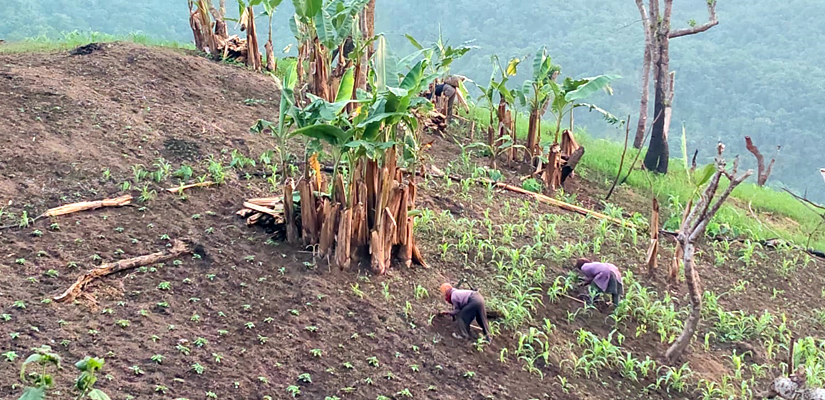

Naga society is often defined by the strength of its community. From the village to the church to urban localities, participation is not optional but expected. Every individual contributes, not as an isolated actor, but as part of a collective. This deeply rooted culture has shaped governance, social support systems, and even government policy. The Nagaland Communitisation of Public Institutions and Services Act stands as a clear example of this ethos, where communities were empowered to manage elementary education. Its recognition through the prestigious UN Public Service Award in 2008 reflects the global relevance of this model.
Yet, this strength may also have an unintended consequence. Strong collectivism can sometimes diffuse individual expression. In a society where collective contribution is already strong and structured, individual philanthropy appears limited. It is not that people are unwilling to give. On the contrary, they give regularly through community obligations. However, these contributions are often embedded within group expectations rather than expressed as personal initiatives.
This raises an important question. Does the strength of the community, over time, reduce the space for individual acts of philanthropy? When giving is institutionalized within the community, individuals may feel that their responsibility is already fulfilled, leaving little room for personal initiatives or independent efforts. When everyone is already contributing through community channels, the psychological and social space for individual philanthropy becomes smaller. The idea of stepping out to initiate personal philanthropic efforts may seem unnecessary or even redundant.
In more individualistic societies, philanthropy is often driven by personal choice, identity, and legacy. In contrast, Naga society distributes this responsibility across the collective. The result is a system that ensures broad participation but may limit visible individual leadership in philanthropy.
This is not a weakness but a structural difference. The community model ensures inclusivity and shared responsibility. However, there may be value in encouraging a parallel culture where individuals can also take initiative beyond collective frameworks. Such a balance could strengthen both systems.
The challenge is not to replace community with individualism, but to allow both to coexist.