
Subonenba Longkumer highlights breeding gaps, costly feed and weak markets in Mokokchung
Arenjungla Kichu
Mokokchung | 11 March
Even as pork remains the most widely consumed meat in Nagaland, pig farmers in Mokokchung district say the sector continues to struggle due to structural challenges ranging from the absence of breeding infrastructure and high feed costs to the lack of a stable local market.
Nagaland is among the highest pork-consuming states in the country, yet much of the supply continues to come from pigs brought in from outside the state.
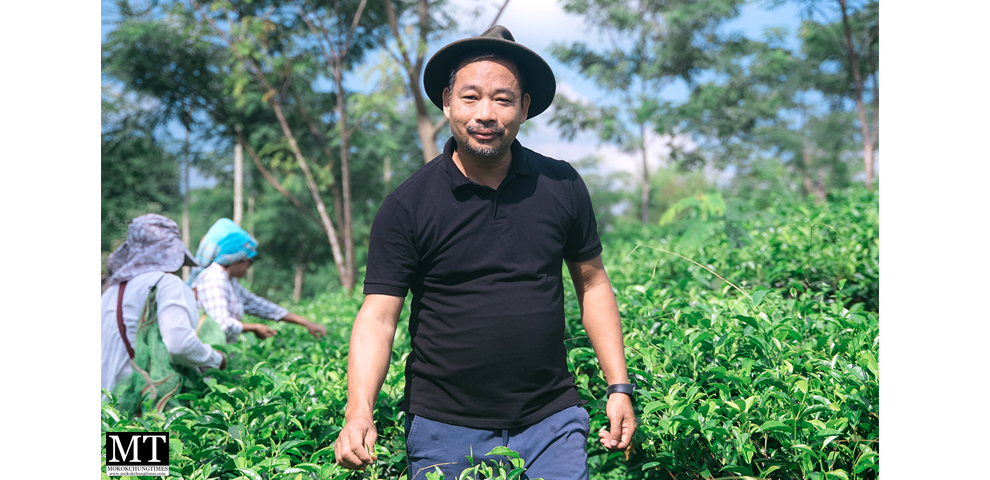
Subonenba Longkumer, Director of the Community Educational Centre Society and proprietor of “The Naga Farm” in Tuli, Mokokchung, said the district currently lacks a recognised pig breeding unit, a gap he believes is affecting the quality and survival of pigs in the region.
Longkumer, who operates one of the largest pig farms in Mokokchung district with around 200 pigs and produces about 400–500 piglets annually, has also been involved in training farmers through the Community Educational Centre Society.
“I discovered it was crucial to have a breeding unit. Mokokchung lacks a proper recognized breeding unit and hence there is a lot of inbreeding,” he told MT.
According to him, the absence of organised breeding services has resulted in farmers repeatedly using the same male pigs across generations.
“The same male pigs are used for breeding generation after generation. The inbreeding piglets are not of good quality and are susceptible to disease,” he said.
Longkumer pointed out that such practices could also weaken the pigs’ ability to withstand outbreaks such as African Swine Fever, which wiped out pig populations across Nagaland in recent years.
“For instance, African Swine Fever wipes out entire pig populations. This inbreeding is also a factor why our pigs are unable to resist such fever,” he said.
He added that major breeding facilities are currently available only in Dimapur and Medziphema under institutions such as the Indian Council of Agricultural Research, leaving farmers in other districts with limited access to improved breeding services.
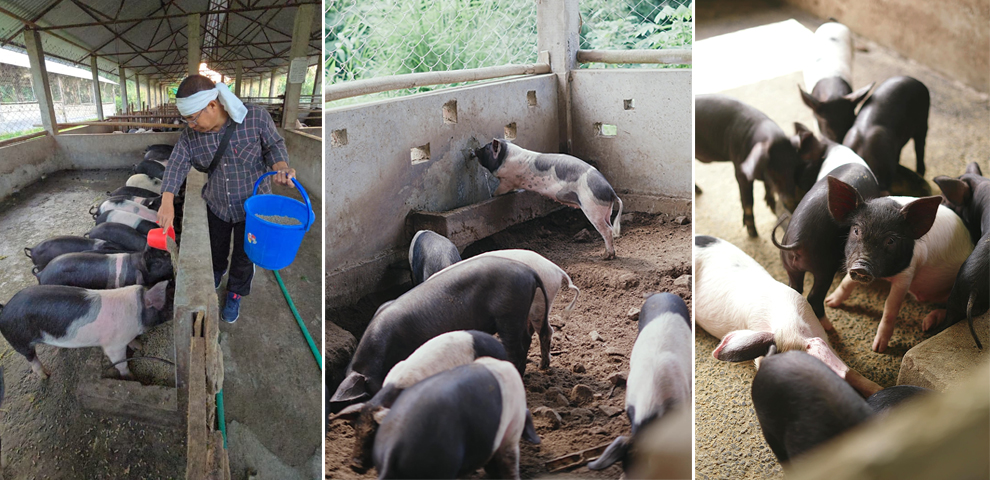
“We don’t have artificial insemination facilities as well, even the government does not have the facilities,” he said, adding that farmers often lack proper training on biosecurity practices and disease prevention.
Through the Community Educational Centre Society, Longkumer said efforts are being made to improve awareness and build capacity among farmers.
Since 2021, the society has been focusing on pig and fish farming and has trained more than 200 farmers, while working with around 300 women pig farmers in the Tuli area.
According to him, farmers under the society’s network experienced lower mortality rates even during the African Swine Fever outbreak.
“As per our observation, even when all pigs were dying during the African Swine Fever, only around 20–25 percent of the pigs under the society died,” he said.
He attributed this to better breeding practices, vaccination for Classical Swine Flu (CSF) and improved awareness on biosecurity measures. He also noted that there are a lot of farmers who were and is still reluctant to get their pigs vaccinated.
The society has also introduced a piglet-sharing system aimed at encouraging small farmers.
“We give two piglets for free of a quality breed and seek three piglets in return after two years; three piglets for five piglets and so on,” he said.
“We are also introducing Bokashi Technology, a way of pig farming that uses little water and produces a 100% smell-free pig sty,” he added.
While pig farming is expanding in some parts of the district, Longkumer said farmers continue to struggle with market access.
“Even I am finding difficulties to sell the pigs right now,” he said.
According to him, demand for locally reared pigs rises mainly during the winter months.
“Local market exists only in the month of November, December and January. Beyond that there is no local market,” he said.
For most of the year, markets are dominated by pigs brought from other states, which are cheaper due to lower production costs.
According to Longkumer, the price difference is largely due to the high cost of feed, which farmers in the district must import from outside the state.
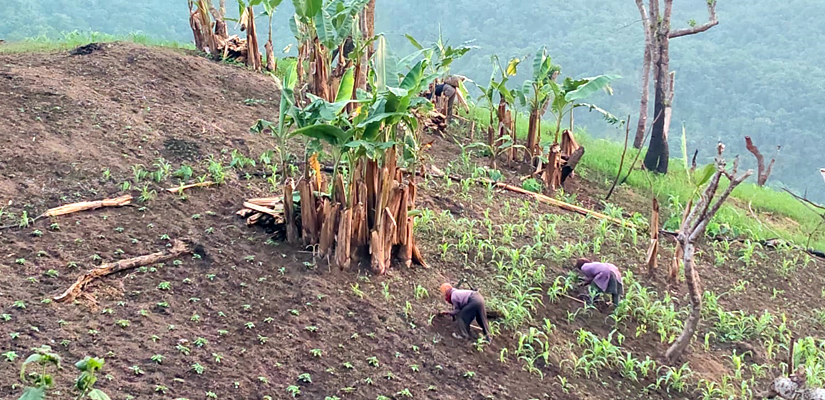
Longkumer said locally reared pigs are often sold at higher prices because farmers depend heavily on imported feed. According to him, pig feed consists of around 60–70 percent maize, but maize production in the district remains limited. “Maize in the field costs around Rs 20. The crushed maize powder in Mokokchung may cost Rs 30 to Rs 35, but in other states it is around Rs 9.” he said, adding that the price difference significantly increases production costs for local farmers.
He also pointed out that labour costs in the district are high. “The labour cost here is around Rs 600 and a heavy meal, so a poor farmer is unable to incur the labour cost,” he said. In addition, farmers in Mokokchung operate on relatively small landholdings in hilly terrain, making it difficult to grow feed crops at scale. “In our hilly terrain it is difficult to grow maize at scale. So when we calculate all these resources, it does not add up,” he said, adding that these factors make locally reared pigs more expensive.
Longkumer further noted that Nagaland lacks food processing industries that could provide cheaper feed alternatives. “In other states, waste is generated in tonnes in food industries and farmers can buy those cheaply to feed pigs. But for us, there is no food industry, and our feed really becomes expensive”.
He said this is where government intervention becomes necessary if the state hopes to reduce dependence on pigs supplied from other states.
When asked whether farmers could form a union and engage with town councils and municipal councils in Mokokchung to formulate policies that would secure market access for local producers, Longkumer said such policies were urgently needed.
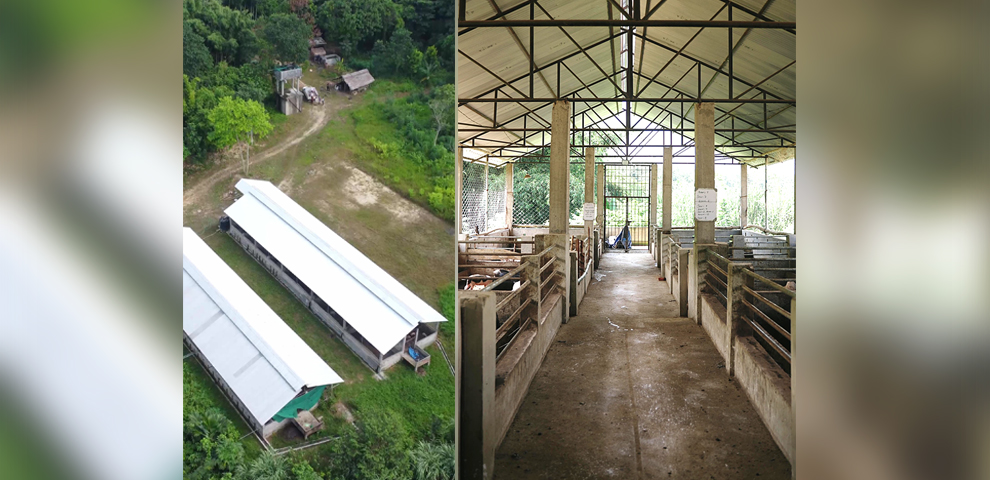
According to him, while farmers must work towards ensuring consistent supply, local authorities could also help create a system that allows locally reared pigs to enter the market.
Most farmers currently rear pigs only for meat and sell them after about a year, rather than developing a structured breeding system. “The twelve-month scope is all we have. That’s why we are not progressing,” he said.
However, he expressed concern that expansion without proper policy support could create new challenges in the coming years.
“At least now we have the market but in the next two to three years, if pig farms scale up, it will be difficult to find the market,” he said.
When asked whether there was a farmers’ union that could collectively raise such concerns, Longkumer said that no such body currently exists for pig farmers in the area.
“So far, there is none,” he said, adding that under their society, there are currently around 300 farmers in Tuli engaged in pig farming. According to him, efforts are underway to bring these farmers together to discuss possible solutions to the challenges faced by the sector.
Longkumer said he would like to see the formation of a Farmer Producer Organisation (FPO) that could help coordinate production and marketing among farmers.
“I would love to build a farmer FPO and even discuss whether we can supply pigs for an entire year,” he said, adding he would love to discuss the matter with the higher authorities as well.
(Subonenba can be contacted at Instagram @TheNagaFarm and for Bokashi Technology, contact +91 7629072074)