

The Zunheboto Range Students’ Union (ZRSU) publicly destroyed seized illicit tobacco products on June 12 after intercepting consignments allegedly being transported into Zunheboto town in violation of the state government’s prohibition order.
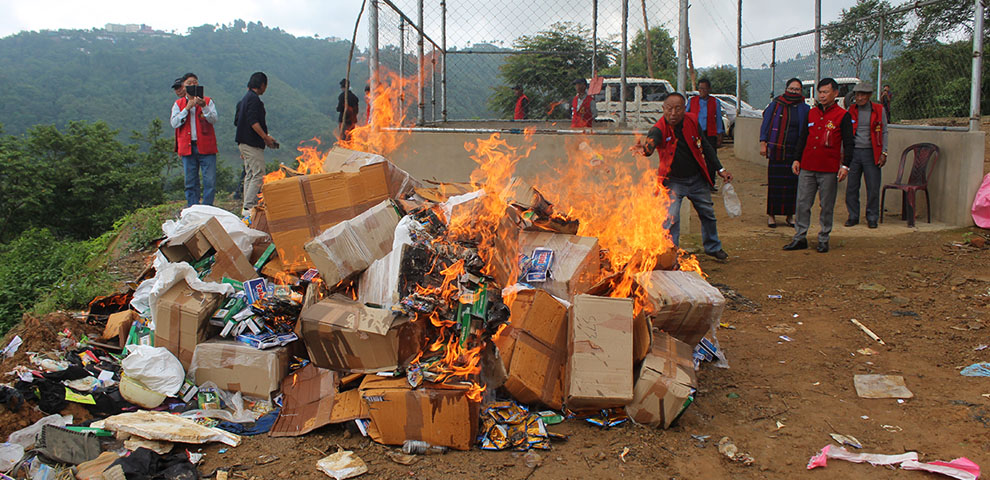
The destruction was carried out at the Lizu Naghuto dumpsite under Zunheboto Sadar in the presence of representatives of the GBs Association and Sumi Totimi Loka, Zunheboto Town.
According to the union, the tobacco products were seized on June 9 at New Colony and Project Colony areas of Zunheboto town following the interception of a truck transporting the products in bulk. The action was taken in response to a notification issued by the Directorate of Health and Family Welfare under the authority of the Commissioner of Food Safety and Commissioner & Secretary to the Government of Nagaland prohibiting the sale, storage, transportation, distribution, manufacturing and processing of specified tobacco products in the state.
The union alleged that the illicit tobacco products had been concealed among grocery items and other daily essentials during transportation.
ZRSU stated that 19 package boxes of tobacco products allegedly linked to wholesalers identified as Sujit Kumar and Samuel, along with four package boxes allegedly linked to Ajmat Karim, proprietor of M/s General Shop, were destroyed during the exercise.
The union said it had resolved not to allow seized tobacco products to re-enter the market, maintaining that such products could contribute to revenue loss and encourage smuggling and other illegal trade activities.
In a statement, ZRSU expressed concern over the increasing accessibility of tobacco products despite existing restrictions and described the trend as a serious threat to public health, particularly among young people and students.
The union noted that nicotine is a highly addictive substance that can adversely affect health and argued that the availability of tobacco products undermines efforts to protect the younger generation from addiction and related health risks.
Calling for greater vigilance, ZRSU urged the district administration to take stricter measures to enforce tobacco-control laws and curb the illegal transportation and sale of prohibited products.
The union maintained that effective enforcement was essential not only to prevent illicit trade but also to safeguard public health and reduce the burden of tobacco-related diseases in the community.
It further reiterated its commitment to working with civil society organisations to ensure that prohibited tobacco products do not find their way back into the market and to support efforts aimed at creating a healthier environment for future generations.