

Union minister claims region is emerging as a logistics, manufacturing and connectivity hub
The Northeast is increasingly emerging as a strategic trade, logistics and connectivity corridor linking South Asia with Southeast Asia, Union Minister for Ports, Shipping and Waterways Sarbananda Sonowal said on Monday, describing the region’s transformation into an economic growth hub as one of the country’s most significant development stories of the past decade.
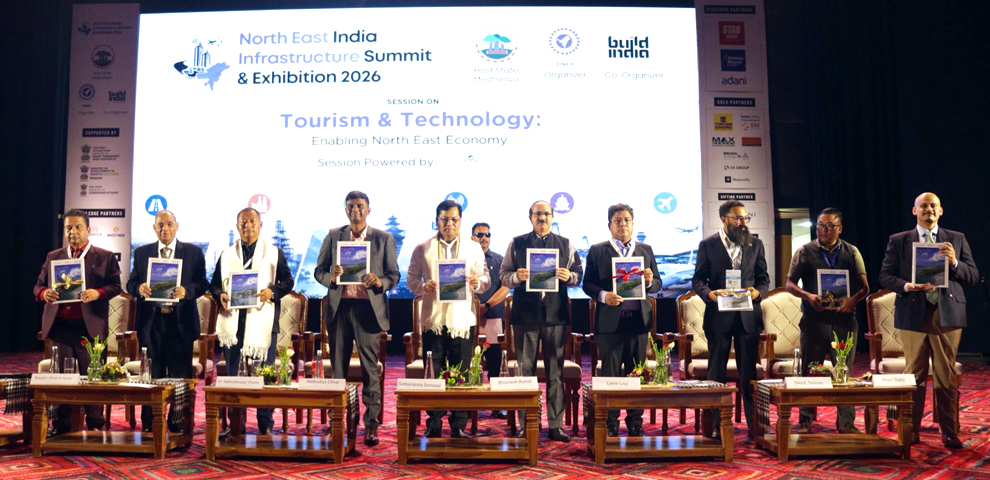
Addressing the North-East India Infrastructure Summit and Exhibition 2026 in Shillong, Sonowal said sustained investments in transport networks, digital infrastructure, logistics, waterways and industry have repositioned the region from the periphery of India’s economy to a key component of its growth strategy.
“The Northeast is no longer a landlocked region. It is increasingly becoming a logistics, trade and connectivity corridor linking South Asia with Southeast Asia,” Sonowal said.
Highlighting the region’s strategic importance under India’s Act East Policy, the minister said improved connectivity and infrastructure are creating new opportunities for trade, investment and regional integration. He pointed to the development of inland waterways on the Brahmaputra and Barak river systems, expansion of road and rail networks, and growing air connectivity as key drivers of economic transformation.
Sonowal said projects worth more than Rs 750 crore have already been completed on inland waterways infrastructure in Assam, while projects exceeding Rs 1,170 crore are under implementation. Facilities such as the Jogighopa Inland Waterways Terminal and the Bogibeel Inland Water Transport Terminal, he said, are strengthening multimodal connectivity and improving access to markets in Bangladesh, Bhutan and beyond.
The minister said public investment in the Northeast has risen significantly over the past decade, with Gross Budgetary Support allocations increasing from around Rs 20,000 crore in 2014 to more than Rs 1.08 lakh crore in 2025-26. According to him, cumulative expenditure in the region has crossed Rs 7.3 lakh crore during the period.
He said nearly 10,000 kilometres of national highways have been constructed since 2014, while railway projects worth about Rs 77,000 crore are currently under implementation. The number of operational airports in the region has increased from nine to sixteen, expanding connectivity and access to markets.
Sonowal also highlighted the emergence of advanced manufacturing in the Northeast, citing the semiconductor assembly and testing facility at Jagiroad in Assam as evidence of the region’s changing economic profile.
“A region once associated with connectivity deficits is now participating in one of the world’s most advanced manufacturing sectors,” he said.
Referring to Meghalaya, Sonowal said the state has leveraged improvements in connectivity, tourism, governance reforms and digital infrastructure to attract investments across sectors including tourism, information technology, logistics, agriculture and renewable energy. He also noted Meghalaya’s performance in ease of doing business reforms and its growing reputation as an investment destination.
The minister later chaired a CEO roundtable attended by representatives from major companies across sectors including cement, steel, renewable energy, hospitality, manufacturing and technology.
CM Rio pushes Airport, IIT and connectivity projects
Nagaland Chief Minister Neiphiu Rio today highlighted key development priorities, including the proposed Ciethu Greenfield Airport, Nagaki City in Chümoukedima, and the establishment of an IIT in the state.
Addressing the North East India Infrastructure Summit & Exhibition 2026 in Shillong, Rio described the Trans-Nagaland Highway, also known as the Foothill Road, as a transformative project that would improve connectivity, boost economic growth, and unlock investment opportunities across Nagaland.