
In a significant step towards strengthening Nagaland’s emerging coffee industry, Dr. Sentitula, IFS, Director of Tourism & Industries, North Eastern Council (NEC), Shillong, Ministry of DoNER conducted a comprehensive pre-investment site inspection of the Ghotovi cluster and Tuophema cluster under the “Cluster based Coffee Value Chain Development in Nagaland” Project on June 22 and 23 last.
The visit forms part of the NEC’s strategic assessment under the regional Mission Coffee initiative, aimed at developing an integrated “Seed to Cup” coffee value chain that enhances production, processing, value addition, branding and market access while positioning Nagaland as a producer of specialty single-origin organic coffee.
Accompanied by officials of the Department of Land Resources, Government of Nagaland, the Director undertook detailed field inspections in the two clusters to evaluate the readiness of critical infrastructure and plantation components proposed under the project.
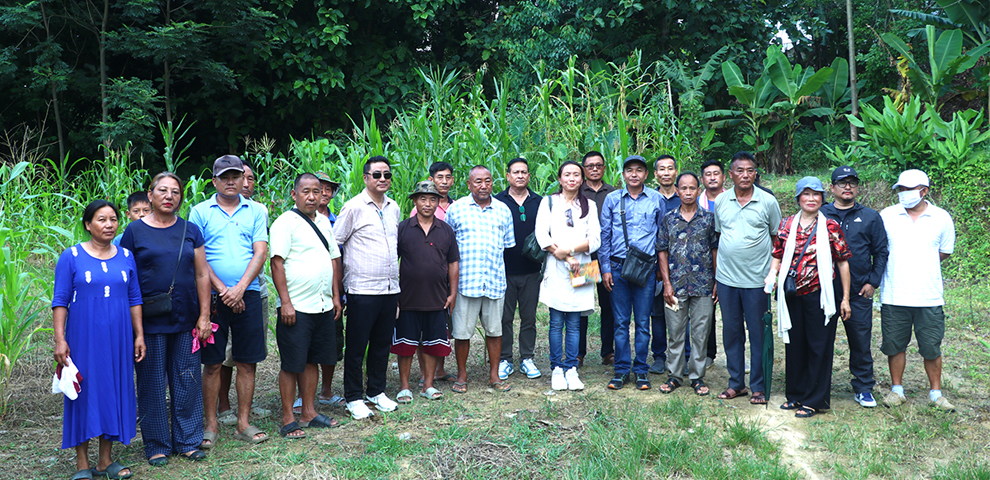
During site visit to Ghotovi cluster on June 22, Dr. Sentitula interacted extensively with farmers, village leaders, and stakeholders from Nihokhu, Nikhekhu, Kuhoxu, Niuland, Hovishe, and Ghotovi villages.
Discussions focused on the project’s long-term socio-economic impact, ensuring evidence of community participation and including enhanced household incomes, improved agricultural productivity, sustainable land-use practices, employment generation, and the gradual transition from subsistence agriculture to commercially viable coffee cultivation.
Addressing the farming community, Dr. Sentitula reaffirmed the NEC Ministry of Development of North East Region (DoNER) commitment to supporting the initiative through strategic investments, technical guidance, and institutional collaboration to ensure sustainable implementation.
She commended the active participation of local communities in the pilot phase and noted that the Ghotovi Cluster has the potential to become a model for coffee-based rural transformation across Nagaland and the wider North Eastern Region.
“The Ghotovi Cluster represents a transformative opportunity for Nagaland’s coffee sector. The strong community participation, combined with scientific cultivation practices and modern processing infrastructure, has the potential to establish this region as a producer of premium single-origin coffee while creating sustainable livelihood opportunities for farming communities,” Dr. Sentitula said.
Visit to Tuophema cluster
Under Tuophema cluster, Dr. Sentitula visited Gariphema Bawe village, where she inspected coffee plantations adopting sustainable intercropping practices with avocado and black pepper, demonstrating a climate-resilient and diversified farming model.
She also verified the proposed site for the establishment of a Coffee Washing Station (CWS), which will handle the primary processing of freshly harvested coffee cherries into parchment coffee within the cluster.
At Tuophema village, the Director inspected the proposed sites for the installation of two Coffee Washing Stations and a Hi-Tech Coffee Nursery that will produce quality coffee seedlings for future area expansion.
She further visited the 2026 coffee plantation spanning approximately 20 hectares with nearly 40,000 No. of coffee plants, representing one of the largest plantation expansions under the Tuophema Cluster.
At Tsiemekhuma village, she carried out site verification for another proposed Coffee Washing Station aimed at enhancing local coffee processing infrastructure. The visit concluded at Chiechama village, where she had inspected the 2026 coffee plantation covering 1 hectare with around 2,000 No. of coffee plants, underscoring the project’s phased, inclusive, and community-driven approach to expanding coffee cultivation across the cluster.
The Director also reviewed the field observations in detail and issued clear directions to the implementing department to ensure strict adherence to all operational and financial guidelines before any project funds are released. She emphasized that beneficiary communities must constitute appropriate community institutions, execute duly signed Memoranda of Understanding (MoUs), open dedicated bank accounts, adopt prescribed guidelines for the maintenance and management of coffee plantations, and ensure sustained technical support and monitoring by the Department.
The visit concluded with a renewed commitment to advancing the Mission Coffees of Nagaland vision of creating a sustainable, market-driven coffee ecosystem that integrates production, processing, value addition, branding, and rural entrepreneurship, thereby positioning Nagaland as a leading coffee-producing state in Northeast India.
(This news report has been contributed by senior journalist Chizokho Vero. Except for the headline, the story has not been edited by MT)