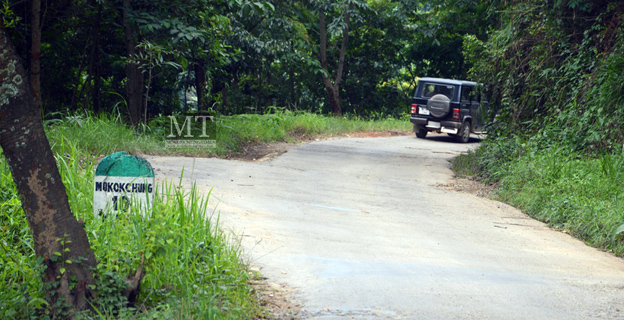

The Forest and Biodiversity Management in the Himalaya (Nagaland) Project (FBMP) held its half-yearly review meeting at Marepkong Community Hall in Mokokchung on June 2 to assess project progress, address implementation challenges and chart the way forward for biodiversity conservation and community-based natural resource management.
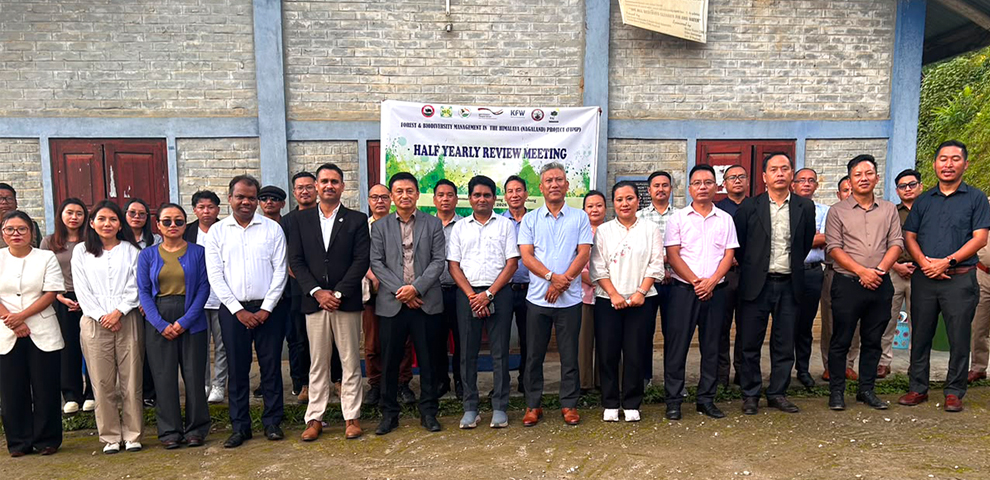
The review was held outside Kohima for the first time, bringing together officials and project personnel from implementing districts for field-level interaction and coordination.
FBMP is a German Government-assisted initiative financed through KfW Development Bank. Launched in 2021, the project is being implemented by the Forest Department and the Nagaland Empowerment of People through Economic Development (NEPED) programme in five districts, covering 13 conservation landscapes and 64 villages through Community Conserved Area Management Committees.
The programme began with a welcome address by Deputy Project Director and Conservator of Forests (STC), Hukato Chishi, IFS. Representatives from the forest divisions of Tuensang, Wokha, Kohima, Peren and Mokokchung, along with NEPED-I and NEPED-II, presented updates on project achievements and challenges.
The review covered conservation activities, springshed proposals, mitigation of human-elephant conflict, implementation of Free, Prior and Informed Consent and Memorandums of Understanding, GIS surveys, geotagging, livelihood interventions, documentation and financial progress. Discussions also focused on the Conservation Fund, pilot villages, livelihood enterprises and greater involvement of churches and faith-based institutions in conservation initiatives.
Concluding the meeting, Project Director, FBMP, Sidramappa Chalkapure, IFS, underscored the importance of timely implementation, proper documentation and regular field monitoring to achieve sustainable forest management and improved rural livelihoods.