
Authorities step up coordinated measures to maintain connectivity, restore essential services and ensure steady supply of commodities
With a major section of National Highway-2 (NH-2) rendered unserviceable by floods and landslides triggered by incessant rainfall, the Mokokchung district administration has designated the Mokokchung-Mariani road (NH-702D) as the district’s primary lifeline to maintain connectivity and ensure the uninterrupted movement of essential commodities and public services.
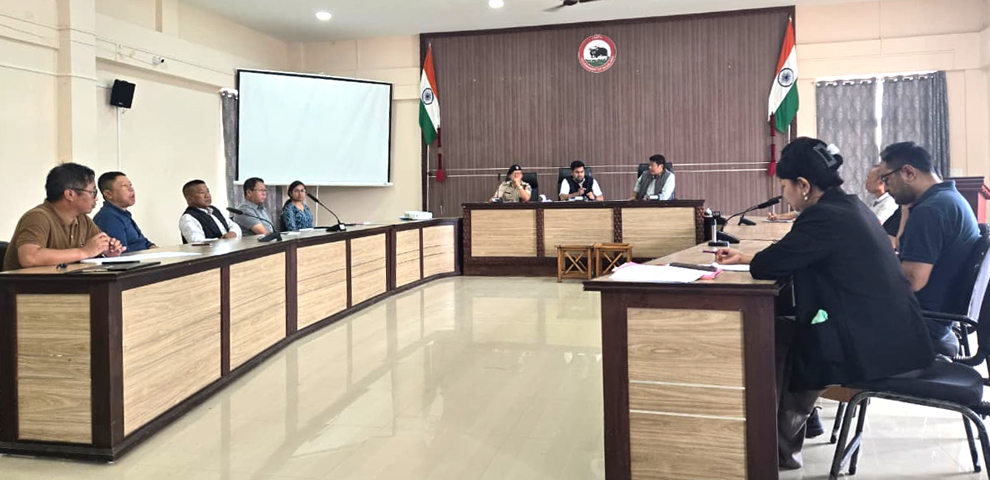
The decision was taken at an emergency meeting of the District Disaster Management Authority (DDMA), chaired by Deputy Commissioner Ajit Kumar Verma IAS, today, July 21, which reviewed the impact of the disaster and chalked out coordinated measures for road restoration, essential services and emergency preparedness.
According to the PWD (National Highways), 30 landslides have been reported between Mokokchung and Tuli. While most were minor along the Yisemyong-Chuchuyimlang and Unger-Merangkong stretches, five major landslides – two at Merangkong and three between Tzudikong and Tuli have severely affected connectivity.
Officials informed the meeting that the NH-702D stretch from Mokokchung to Longtho and the Doyang-Mokokchung road have been cleared for traffic. However, a massive crack and road subsidence on the Unger-Chuchuyimlang stretch of NH-2 have rendered the existing alignment unserviceable.
Emphasizing that restoration of NH-2 remains the administration’s top priority, the Deputy Commissioner directed all concerned departments to ensure continuous maintenance of NH-702D, describing it as the district’s only viable road link until the damaged highway is restored.
PWD (Roads & Bridges) informed the meeting that the A-T Road remains the only alternate route serving Tuli subdivision. While five damaged roads have already been reopened, the NH-2-Salulamang stretch remains completely cut off and is expected to take another four to five days before a single lane can be restored. The Deputy Commissioner directed the department to deploy maximum manpower to expedite restoration works.
The meeting also reviewed the impact on essential services. The Electrical Division reported that nine villages under the Chuchuyimlang-Yisemyong area remain without power. Restoration through the existing line is currently not feasible because of unstable soil conditions. Officials said work on the Impur-Yisemyong power line is being expedited and could restore supply in about 20 days, although it may otherwise take up to two to three months.
Communication services have also been affected, with Tuli remaining without mobile connectivity for the past 28 hours. BSNL officials said restoration beyond Tuli Paper Mill has not been possible because of damage to infrastructure, while towers along the Changki-Mariani stretch have also been affected. Stressing the urgency of restoring communication in Tuli town, the Deputy Commissioner directed BSNL to immediately deploy technical personnel to the affected area.
On the availability of essential commodities, the Food and Civil Supplies Department informed the meeting that supplies remain adequate as long as road connectivity is maintained. The Mokokchung Chamber of Commerce and Industry (MCCI) estimated that the district has sufficient stocks of essential commodities for seven to eight days, provided neighboring districts do not also rely on Mokokchung’s supplies.
To strengthen emergency healthcare services, the Department of Health and Family Welfare informed the meeting that two medical officers would be stationed in Tuli. The Deputy Commissioner also directed that a mobile medical unit and an ambulance remain positioned in the subdivision.
Recognizing the strategic importance of NH-702D, stakeholders resolved to use the route for passenger buses and goods transport while closely monitoring its condition. To protect the highway from further damage, the meeting decided to prohibit overloading of trucks and restrict vehicles with more than six tyres from using the route. Departments were also asked to address potholes, drainage issues and frequent rockfalls through coordinated maintenance.
Meanwhile, only light vehicles will be permitted to use the Asangma-Tzuüsangra (A-T) Road as the ageing Longkong Bridge cannot safely support heavy traffic. While NST and other public service buses will continue to ply the route, restrictions on heavy dumpers will remain in force to safeguard the bridge.