

Zonal-level stakeholder consultations on the proposed Nagaland Community Conserved Areas (CCA) Policy were held at Tuensang on July 28 and Mokokchung on July 29, bringing together community representatives and government officials to discuss a policy framework for strengthening community-led conservation.

The consultations were organised by the Foundation for Ecological Security (FES) in collaboration with the Nagaland State Biodiversity Board (NSBB), Nagaland Community Conserved Areas Forum (NCCAF) and International Centre for Integrated Mountain Development (ICIMOD).
The Tuensang consultation at Chang Baptist Lashong Thangyen brought together representatives from CCAs across Tuensang, Shamator, Noklak, Kiphire and Mon districts, along with Village Council and CCA Committee representatives and Forest Department officials. The Mokokchung consultation at Sangtemla Union Hall included CCA representatives from Mokokchung and Zunheboto districts and Forest Department officials.
Participants were briefed on the rationale, objectives and proposed process for developing the state-level policy. Discussions emphasised the need to recognise community-led conservation while safeguarding customary ownership, indigenous stewardship and local governance systems.
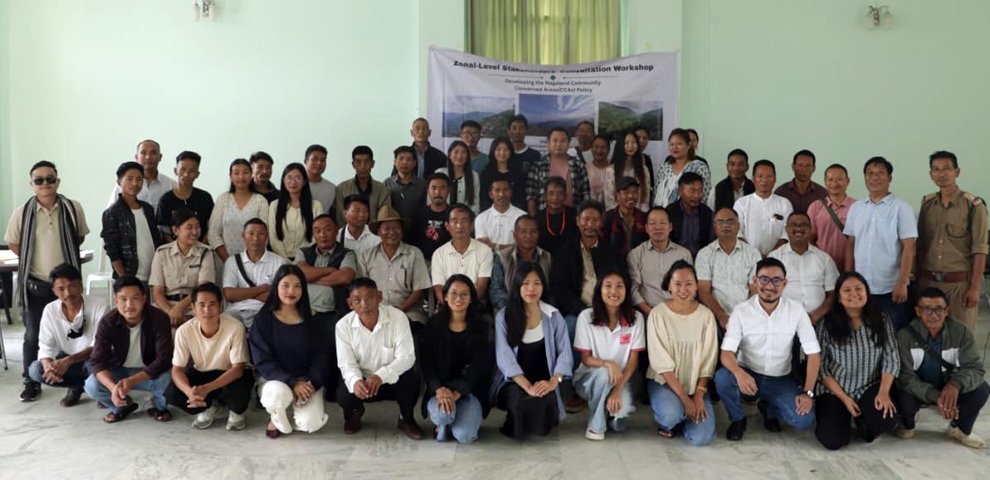
The consultations included thematic group discussions on criteria for recognising CCAs, governance and management arrangements, recognition procedures and support mechanisms. Participants stressed that CCAs should be voluntarily conserved under customary governance, with clearly defined institutions and a commitment to protecting biodiversity, water sources and culturally significant sites.
They also highlighted the importance of Village Councils and CCA Management Committees, meaningful participation of women and youth, transparent recognition based on Free, Prior and Informed Consent (FPIC), and sustained technical, institutional and financial support.
Participants emphasised that the proposed policy should “recognise and strengthen existing customary conservation systems rather than replace them”. They called for an enabling framework that empowers communities, promotes inclusive governance and keeps decision-making with local communities.
The recommendations from both consultations will contribute to the draft Nagaland CCA Policy, with the aim of ensuring that it reflects the state’s diverse ecological landscapes, customary governance systems and community conservation practices.