
A two-day National Seminar on “Sustainability, Innovation and Development of Indigenous Knowledge Systems in Northeast India” concluded at Pfutsero Government College on Thursday, bringing together academicians, researchers and scholars to discuss the relevance of indigenous knowledge in contemporary society.
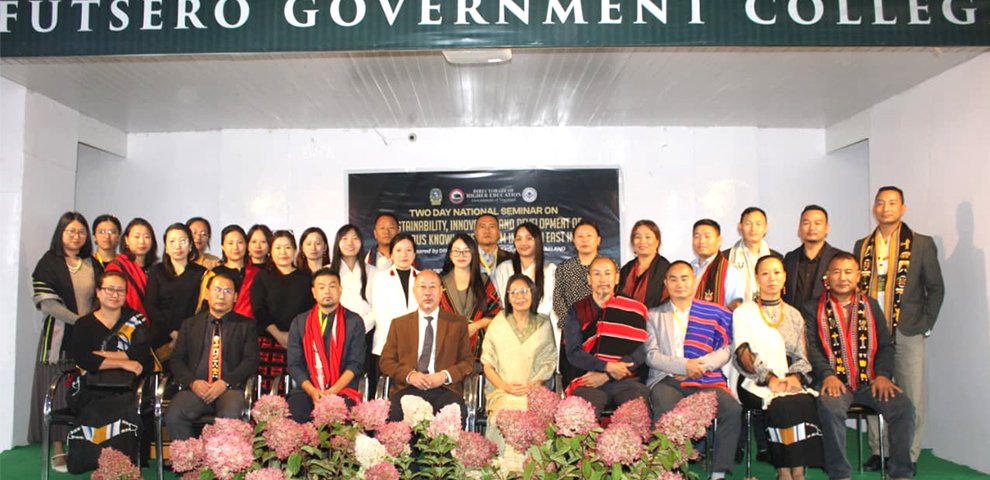
Sponsored by the Directorate of Higher Education, Nagaland, the seminar was organised by the Internal Quality Assurance Cell and Department of History, Pfutsero Government College, from August 5 to 6.
A total of 21 papers were presented, including 14 by faculty members and seven by research scholars. The papers covered nine sub-themes, including indigenous ethnic food, decolonising indigenous knowledge, oral narratives, ethnomedical practices, traditional art and architecture, hunting and fishing, marriage systems, and agricultural and natural resource management.
In his keynote address, Dr. Thungdemo N. Yanthan, IQAC Chairperson and Chairman of the Organising Committee, said indigenous knowledge was “not merely a legacy of the past but a living resource for sustainable and inclusive development.” He highlighted its recognition under national and global policy frameworks, including NEP 2020, and called for stronger links between traditional knowledge and modern science.
Prof. N. Venuh, Pro-Vice Chancellor of Nagaland University, described the seminar as timely and said NEP 2020 had given greater importance to indigenous knowledge through curriculum integration. He urged researchers to document and preserve traditional practices and local biodiversity.
Addressing the valedictory session, Prof. Zavise Rume, Director, International University, stressed that indigenous knowledge must be understood through the historical and cultural roots of communities. He said geography and topography shape knowledge systems as communities adapt local resources to meet their needs.
The seminar concluded with participants reaffirming the need to document, preserve and promote indigenous knowledge for sustainable development and cultural continuity in Northeast India.