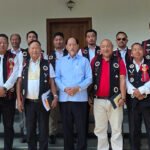

Naga society mourned the passing of Niketu Iralu, a respected elder, intellectual, peace activist and advocate of reconciliation, with political leaders, civil society organisations and Naga groups describing his death as a profound loss to the Naga people and to all those who were touched by his life and work. Iralu passed away in New Delhi on August 18 following a brief illness.
Chief Minister Neiphiu Rio described Iralu as “one of Nagaland’s finest minds”, an intellectual, mentor and tireless advocate for peace and reconciliation. In a condolence message, Rio said Iralu devoted his life to justice, dialogue and understanding and had left an “indelible mark” on the Naga people and others around the world.
Rio recalled Iralu’s association with Moral Re-Armament, now known as Initiatives of Change, and his commitment to building trust and reconciliation across divides. He also highlighted Iralu’s decision to make Sechü-Zubza his home with his wife, Christine Iralu, where they established “Kerünyü Ki”, or House of Listening. The place became a space for peace, reflection and healing, attracting visitors from across India and abroad.
The Chief Minister also recalled Iralu’s contribution to addressing drug and alcohol addiction in Nagaland. Through his initiative of connecting the KRIPA Foundation in Mumbai with the Naga Mothers’ Association, Mount Gilead Home was established at Sechü-Zubza. Iralu served as its first director and counsellor.
Rio said Iralu’s commitment to peace and moral courage earned him the Lifetime Achiever Award from Initiatives of Change International in South Africa in 2025. Describing him as an elder whose wisdom he greatly valued, Rio said Iralu’s passing was both a personal loss and a profound loss for the Naga people.
READ | Veteran Naga peacebuilder Niketu Iralu passes away at 91
The Naga Hoho also mourned Iralu, affectionately remembered by generations of Nagas as “Uncle Niketu”. It described him as a “towering moral voice, visionary peacebuilder, and steadfast advocate of reconciliation” who dedicated his life to healing divisions, building trust and promoting understanding.
The Hoho recalled Iralu’s “Kerünyü Ki” as an embodiment of his commitment to deep listening and bridge-building. It said his values of forgiveness, mutual respect and collective responsibility would continue to guide future generations.
The Global Naga Forum described Iralu as a “rare and irreplaceable presence” in Naga society, praising his wisdom, empathy, humility and ability to make people from different backgrounds feel heard and respected. It said remembering his life also meant carrying forward the values of peace, unity, reconciliation and mutual respect.
The KJCLF in Shillong described Iralu as a “Prophet of Peace and an Apostle of Reconciliation”, recalling his contributions to ecumenical cooperation, peace advocacy and the development of Martin Luther Christian University.
The Angami Women Organisation mourned the death of Iralu, describing him as a respected peace activist, social thinker, writer and advocate of reconciliation. It highlighted his work through the Naga Reconciliation Commission and Initiatives of Change.
The Naga Scholars’ Association described him as a “revered Naga elder, statesman, peace activist” whose life was marked by compassion and a belief in the shared destiny of the Naga people.
The Naga Rising called Iralu “a force for good in this broken world”, recalling his guidance on moral leadership, social reflection and the need to learn from the past while preparing for the future.
- Kitovi Zhimomi, Ato Kilonser of GPRN/NSCN and Convener of the Working Committee of the NNPGs, described Iralu as an “intellectual giant” and a genuine peacemaker. He recalled his personal interactions with Iralu through the Forum for Naga Reconciliation and praised his humility, wisdom and commitment to dialogue.
The Federal Government of Nagaland described Iralu as a “rare voice of conscience” and a bridge-builder who worked for reconciliation during periods of deep conflict. It said his non-partisan approach allowed him to speak across political and social lines.
The NSCN/GPRN also mourned his passing, describing him as a “towering personality” who tirelessly worked for peace, reconciliation and unity.
Across the condolence messages, Iralu was remembered for his intellectual depth, moral courage, humility, deep listening and lifelong commitment to peace. His legacy of reconciliation and bridge-building was widely described as a continuing responsibility for the Naga people.