

The Western Sumi Hoho has urged the Nagaland government to take prompt action on oil exploration in Western Sumi areas, the long-standing Nagaland-Assam boundary dispute along Niuland district and geographical mapping errors affecting several historic Naga villages.
A delegation of the apex tribal body, led by its president, Tokuho Suhoi Neho, along with executive members, called on Chief Minister Dr. Neiphiu Rio at his private residence in Sovima, where the delegation discussed key socio-political and developmental issues concerning the Western Sumi jurisdiction, with particular emphasis on the newly carved Niuland district.
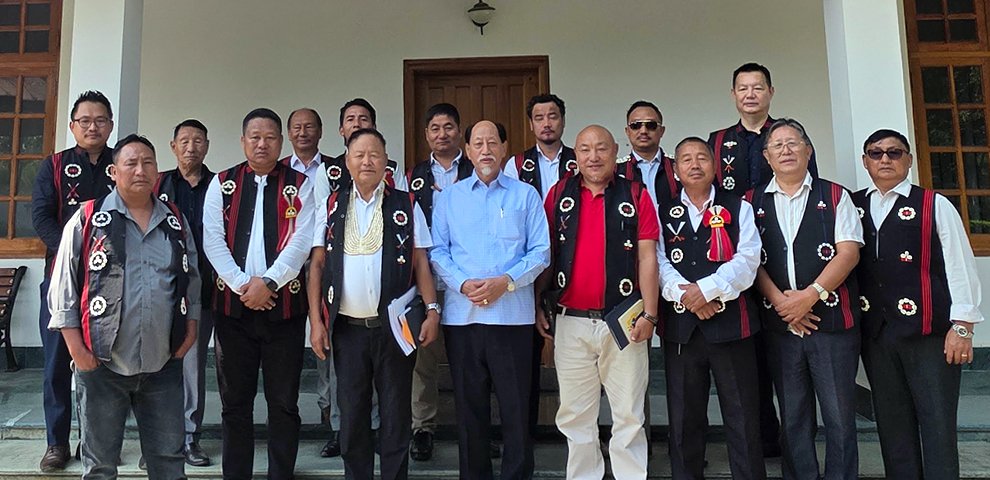
During the consultative meeting, the Hoho submitted a detailed representation outlining the community’s grievances, aspirations and concerns on regional affairs.
On oil exploration, the delegation stressed that any resource extraction initiative must safeguard the rights, land ownership and future economic interests of the indigenous inhabitants. While acknowledging the potential for regional economic growth, it maintained that fair, transparent and community-centric frameworks must be established before operational measures are undertaken.
The Hoho also raised concerns over the unresolved boundary dispute between Nagaland and Assam, particularly along areas bordering Niuland district. It said the prolonged uncertainty along the border continued to affect the peace, security and daily livelihoods of border villagers.
The delegation appealed to the State Government to take proactive and decisive steps towards an equitable and permanent resolution of the territorial dispute, while ensuring the protection and security of indigenous landholders.
Another major concern raised was the discrepancy in the Global Positioning System (GPS) coordinates of several historic Naga villages within Niuland district. According to the Hoho, various digital mapping platforms and official location databases incorrectly show these recognised Naga villages as falling within neighbouring districts of Assam.
Describing the discrepancies as a serious distortion of administrative reality and historical identity, the organisation urged the State Government to coordinate immediately with national mapping agencies and other relevant authorities to rectify the errors at the earliest.
The Chief Minister gave the delegation a patient hearing and acknowledged the importance of the issues raised. He assured the Western Sumi Hoho that the State Government remained committed to safeguarding tribal rights, addressing boundary issues as a priority and taking necessary measures to resolve technical discrepancies concerning village demographics and geographical records.
The statement was issued by the Media Cell of the Western Sumi Hoho.