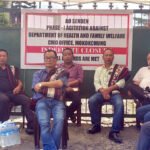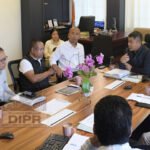

The Governor’s call for outcome-based governance in Mokokchung is welcome, but there is little reason to celebrate it yet. What matters is not what was said at the Deputy Commissioner’s conference hall on Thursday, but what happens in the weeks and months after the meeting.
Departments have long been required to implement schemes, inspect works, meet targets and submit progress reports. Yet delayed projects, incomplete works and poorly coordinated programmes remain familiar features of public administration. Telling officers to fix responsibility for delays does not, by itself, fix responsibility.
The more uncomfortable question is why these basic principles need to be restated at all.
The Governor’s three questions, “What have we achieved? What remains pending? And what specific action should be taken?”, should not be confined to a meeting. They should become the basis for reviewing every major development project in the district. If a project is pending, the public should know why, who is responsible for resolving the problem and by when it is expected to be completed.
The same applies to the call for convergence. Agriculture, tourism, youth development, roads and rural services are routinely discussed as separate sectors, even though they are interconnected in the lives of ordinary people. A farmer does not experience development department by department.
Nagaland does not suffer from a shortage of schemes or government announcements. What it suffers from is a persistent gap between intention and execution.
The Governor’s office can make the Mokokchung visit consequential by demanding an action-taken report, setting measurable benchmarks and returning to review whether those commitments have been met.
Otherwise, Thursday’s meeting will become what such meetings too often become: presentations delivered, observations recorded and officers returning to business as usual.
Governance should ultimately be judged not by the number of meetings held, but by the problems solved and the issues that no longer need to be discussed.