

Travel + Leisure recognises India’s diversity; separate Nagaland feature explores Naga traditions, indigenous crafts and efforts to preserve cultural heritage
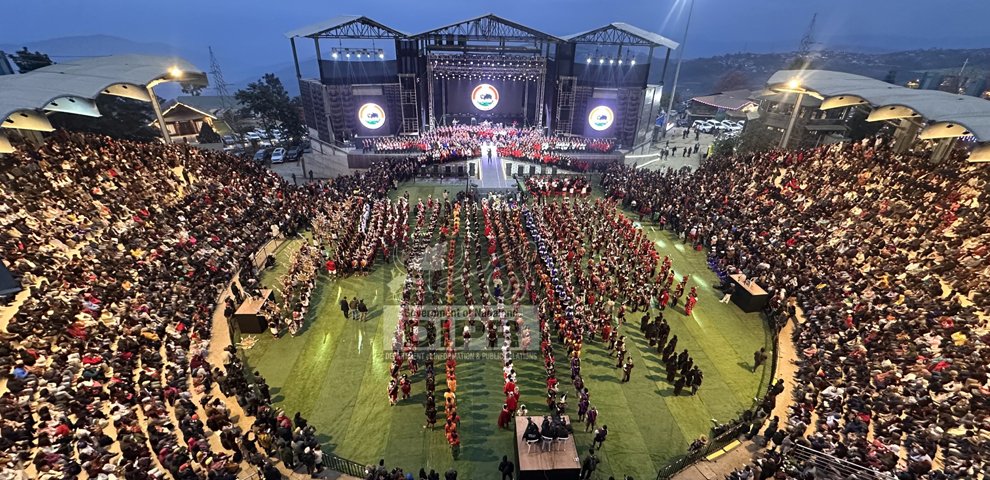
Nagaland’s Hornbill Festival has received international attention after American travel magazine Travel + Leisure named India its ‘Destination of the Year’ for 2027, highlighting the festival among the country’s distinctive cultural and travel experiences.
In its announcement, the magazine described India as a destination offering remarkable diversity, from tiger safaris in Madhya Pradesh’s Panna National Park to the cultural traditions of the Hornbill Festival in Nagaland. The selection also draws attention to destinations and experiences across the country, including Lakshadweep, historic regions of Tamil Nadu and the food and cultural landscapes of major Indian cities.
Announcing the recognition, *Travel + Leisure* Editor-in-Chief Jacqui Gifford wrote that India’s colours, cuisine, traditional textiles, bustling streets and the warmth of its people had left a lasting impression on her.
“India—a nation of 1.5 billion people, one of the world’s fastest-growing major economies, and home to some of the most spectacular hospitality experiences, bar none—is our destination of the year for 2027,” Gifford wrote.
The recognition comes alongside a dedicated feature on Nagaland published by the magazine on November 9, titled ‘I Traveled to Nagaland for the Annual Hornbill Festival and Came Away With a New Understanding of Northeastern Indian Culture’.
Written by travel writer and photographer Chris Schalkx, the feature explores the Hornbill Festival as a gathering of Naga communities, where traditional performances, crafts, food and cultural practices provide visitors with an introduction to the state’s indigenous heritage.
The article describes the 10-day festival, which began in 2000 and opens annually on December 1, as a platform that brings together communities from different parts of Nagaland to share their traditions and cultural practices.
It particularly highlights the festival’s 16 morungs, traditional community structures recreated at the venue near Kohima. These serve as exhibition spaces where tribes display their crafts, traditional attire and cultural artefacts, alongside performances of songs and dances.
The writer also draws attention to the role of the festival in encouraging younger generations to engage with their heritage. Quoting Angami guide Petezapu Meyase, the article notes that the festival provides an opportunity for young Nagas to learn traditional folk songs, wear traditional attire and reconnect with knowledge passed down by their ancestors.
ALSO READ | Nagaland Home Dept informs of temporary relaxation in Protected Area Permit requirement
Beyond the festival grounds, the feature explores Naga craftsmanship through the work of Jesmina Zeliang, founder of Heirloom Naga, a textile enterprise based in Dimapur. According to the article, the initiative, which began in 1993, has developed into a cottage industry involving more than 400 women weavers across the state.
The publication also highlights the Heirloom Naga Centre, established in 2023, where visitors can explore traditional crafts, participate in workshops and undertake tours of nearby weaving villages.
While recognising Nagaland’s cultural appeal, the feature also points to gaps in its tourism infrastructure, observing that the state remains among India’s least-visited destinations and has limited tourism facilities, particularly luxury accommodation.
In its 2027 selection, Travel + Leisure follows its previous recognitions of Brazil as Destination of the Year for 2026 and Thailand for 2025.
The magazine’s recognition places Nagaland’s cultural heritage within a wider international tourism narrative, with the Hornbill Festival serving as one of the experiences through which international travellers are being encouraged to explore India’s regional diversity.