
Patients from Nagaland travelling to Dibrugarh, Assam, for medical treatment will have access to a dedicated guest house following the inauguration of the Naga Patient Guest House by Nagaland Minister for Housing and Mechanical Engineering P Bashangmongba Chang on November 21.
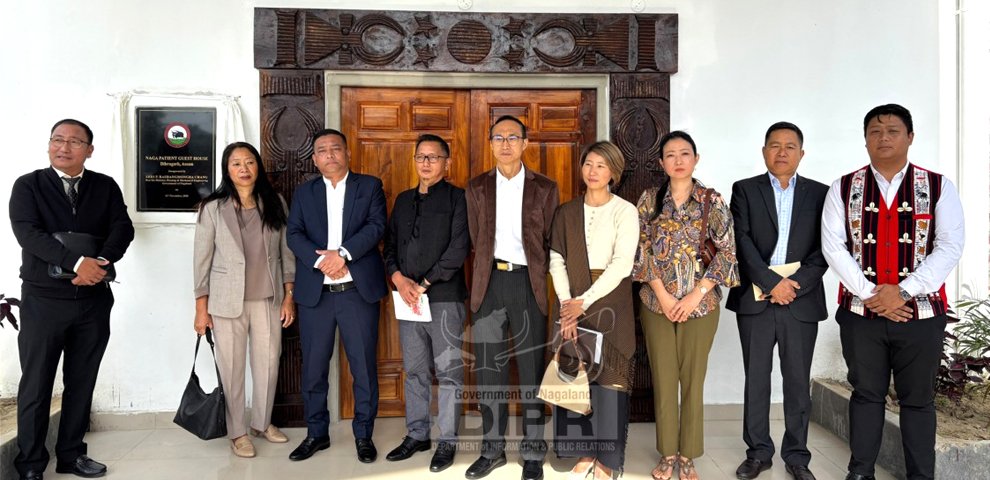
The facility is intended to provide accommodation for patients and their attendants, addressing the difficulties families have faced in finding affordable and suitable places to stay while seeking treatment outside the state.
The government-owned property was purchased in 1984, measuring 16,014 sq ft and including an Assam-type hill building, according to Chief Engineer, PWD (Housing), Er M Hotokhu Achumi, who presented the project report at the inauguration.
The project was approved in 2019–2020 at a cost of Rs 480.34 lakh.
The foundation stone was laid on February 28, 2020, and construction was awarded to KC Infra Projects Private Limited. The building occupancy certificate was issued on July 3, 2026.
The newly constructed G+3 reinforced cement concrete building comprises eight patient rooms, each with an attached kitchen and toilet, a five-bed dormitory, one VIP suite, two two-bedroom residential quarters and a multipurpose hall.
Inaugurating the facility, Chang said patients and their attendants travelling to Dibrugarh had faced difficulties securing affordable accommodation for many years, adding that the additional burden of arranging a place to stay often compounded the stress of medical treatment.
He said the guest house would provide a safe and comfortable place for patients and their families during their stay.
The minister acknowledged Chief Minister Neiphiu Rio for his support and former Housing Minister Tongpang Ozukum, under whose tenure construction began. He also thanked the Nagaland Christian Fellowship, Dibrugarh, for looking after the site, and KC Infra Projects Private Limited for executing the project.
The facility is expected to serve Nagaland residents irrespective of their tribe, village or district, while also strengthening connections among Nagas living in different parts of the country. (With inputs from DIPR)