
ICAR-NBAGR registers Nagaland’s indigenous pig; study records average adult weight of 117.2 kg in boars
The Nagal pig, locally known as the Nagaland Large Black, has been officially registered as a distinct indigenous pig breed of India by the ICAR–National Bureau of Animal Genetic Resources (NBAGR), Karnal.
The national registration gives formal recognition to a pig breed traditionally reared and conserved by farming communities in Nagaland and places it on India’s official register of indigenous animal genetic resources.
Scientific characterisation of the breed was carried out by a multidisciplinary team led by Dr Dinesh Kumar Yadav, Principal Scientist, ICAR-NBAGR, with contributions from Dr Mahak Singh, Dr Mahesh Dige, Dr Hiabe Zeliang and Dr H. Kalita.
The study described the Nagal pig as the largest indigenous pig breed in India, with average adult body weights of 101.3 kg for sows and 117.2 kg for boars.
The breed is closely associated with traditional farming systems and food culture in Nagaland and is valued for its hardiness, adaptability and ability to thrive under low-input production systems.
The registration was achieved through collaboration among ICAR-NBAGR, ICAR Research Complex for NEH Region, Nagaland Centre, the Department of Animal Husbandry and Veterinary Services, Nagaland, and local farming communities that have traditionally maintained the breed.
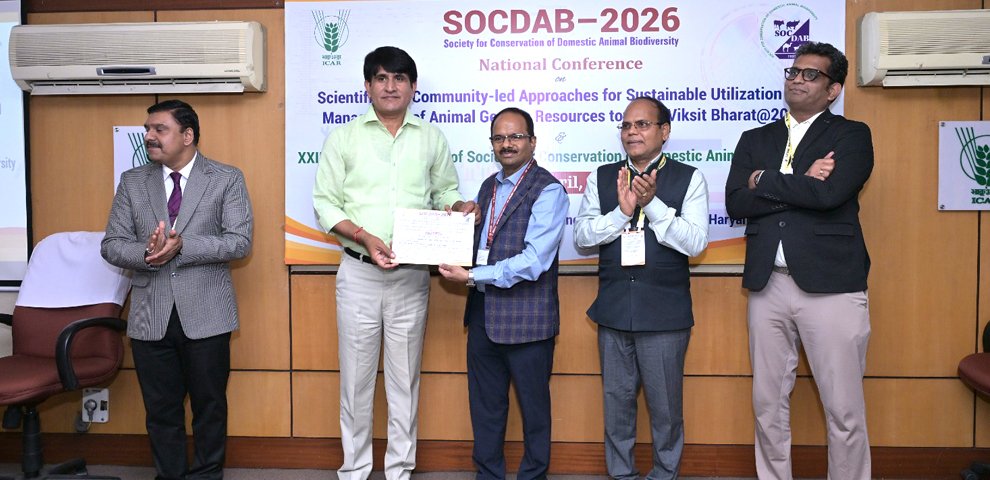
A “Monograph on Nagal Pig”, documenting the breed’s origin, distribution, distinctive characteristics and production and reproductive attributes, was recently released at ICAR-NBAGR in Karnal, Haryana.
The national recognition could provide a basis for focused conservation, genetic improvement and organised breeding of the breed. The State department said future initiatives could include establishing nucleus herds, strengthening community-based breeding programmes and developing a traceable value chain for premium Nagal Pork.
There is also potential for pursuing Geographical Indication (GI) certification for Nagal Pork, subject to the required procedures and approvals.
The recognition also highlights the role of local farming communities in conserving Nagaland’s indigenous livestock genetic resources.
The development was announced in a release issued by Dr Kuokehebi Gwirie, Director, Animal Husbandry and Veterinary Services, Nagaland.