
Policy proposes support for farmers through quality seedlings, training, plantation registration, processing facilities and market linkages
The Nagaland Government has notified the implementation of the Nagaland Agarwood (Conservation and Promotion) Policy, 2026, setting a target of creating around 500 hectares of agarwood plantations annually for the next ten years as part of efforts to promote the tree as an alternative livelihood opportunity for farmers.
The Department of Environment, Forests and Climate Change (DoEFCC) announced the implementation of the policy on Thursday. The notification, dated October 30, was published in the Nagaland Gazette on November 13, following a Cabinet decision conveyed on June 15, 2026.
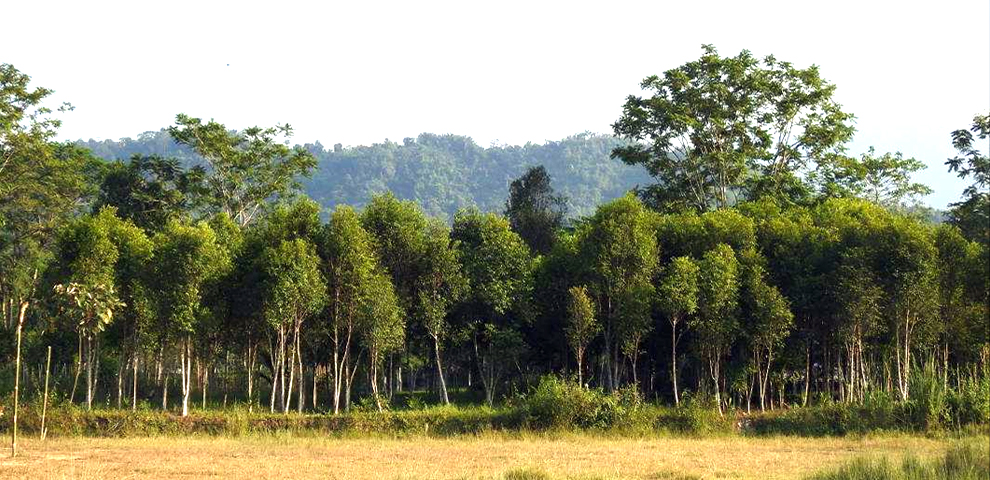
The policy seeks to develop agarwood cultivation, harvesting, processing and trade through a structured system while conserving the species in its natural habitat. It proposes interventions ranging from the supply of quality planting materials and technical training for farmers to plantation registration, scientific harvesting, value addition and access to national and international markets.
Agarwood, scientifically known as Aquilaria malaccensis, is a fragrant resinous wood valued for its use in perfumes, incense and traditional medicine. It is traded in different forms, including raw wood, chips, powder and oil. The resin develops in the tree in response to infection or injury, making scientific cultivation and artificial inoculation important aspects of commercial production.
The policy identifies Nagaland as suitable for agarwood cultivation because of its favourable geo-climatic conditions. It names areas including Tzurang Valley, Japfukong, Tuli, Sitap, Tamlu, Oting, Upper Tiru, Lower Tiru, Tizit, Athibung and Beisumpui as locations where natural distribution of agarwood has been observed.
However, the document notes that unscientific extraction and habitat loss have contributed to the reduction of natural agarwood stands in the state. It therefore seeks to balance commercial cultivation with the protection of existing natural resources.
500 hectares of plantations every year
One of the major targets under the policy is the creation of around 500 hectares of agarwood plantations annually over the next ten years. The Department will identify suitable areas and promote plantations on degraded forest lands as well as community and privately owned land.
To support farmers, the Department proposes to assess the requirement for quality agarwood seedlings and make them available to growers. Regional nurseries are also proposed to ensure a supply of suitable planting materials. Where necessary, seedlings will be sourced from certified agencies during the initial years.
ALSO READ | Nagaland records over 2.28 million cultivated agarwood trees
The policy further provides for technical interventions to identify suitable strains of Aquilaria malaccensis and facilitate their mass multiplication in association with specialised institutions.
It also proposes artificial inoculation of trees wherever natural infection is not at the expected level. This process is intended to facilitate resin formation and improve the prospects of producing marketable agarwood.
The Department will design training programmes for farmers, extension workers and departmental personnel, with particular emphasis on scientific cultivation, plantation management, artificial inoculation, harvesting and post-harvest processing.
Registration and regulation of agarwood trade
Alongside plantation expansion, the policy proposes a system for registering agarwood trees and plantations to maintain a comprehensive database and ensure legal compliance.
The Department will frame appropriate rules and guidelines covering plantation registration, harvesting, processing and transit of agarwood and its products. It will also examine necessary amendments to existing felling and transit rules to ensure compatibility with regulations at the state, national and international levels.
The policy proposes a royalty schedule for agarwood growers and traders, with the stated objective of ensuring better returns for local producers while generating reasonable revenue for the state.
Quality testing and certification are also identified as important interventions to establish the quality and marketability of agarwood and its products. The Department will seek to strengthen national and international market linkages and facilitate the development of processing units for products such as agarwood chips and oil.
These measures are intended to help farmers move beyond the cultivation of trees towards processing and value addition, which could create additional economic opportunities within the state.
Resource mapping and conservation
The policy also calls for a comprehensive assessment of agarwood resources in Nagaland, covering both natural forests and existing plantations.
The resource mapping exercise will be undertaken by the DoEFCC in association with institutions including the Rain Forest Research Institute (RFRI), Jorhat, the Botanical Survey of India and Nagaland University. The assessment will examine the availability and quality of agarwood resources, suitable cultivation areas, planting materials, technical knowledge, processing facilities, market access and working capital requirements.
The findings are to be published by the Department and used to formulate conservation and promotion activities.
For conservation, the policy proposes protection of forests with significant agarwood populations, development of nurseries, plantation of agarwood saplings in degraded forest areas and promotion of cultivation on community and individual lands.
It also envisages collaboration with government and non-government agencies, research institutions and neighbouring states, particularly Assam and Tripura, to share technical knowledge and practices relating to cultivation, harvesting, processing and marketing.
Policy links agarwood promotion to rural livelihoods
The policy places agarwood promotion within the wider context of Nagaland’s agrarian economy and changing patterns of cultivation and employment.
It notes that more than 70 per cent of the state’s population resides in rural areas and identifies jhum or shifting cultivation as a major traditional farming practice. Citing the pressures of climate change, increasing pressure on land and changing land-use patterns, the document states that the jhum cycle has reduced from 12–14 years to 8–10 years.
It also points to rural-to-urban migration, unemployment and the lack of remunerative livelihood opportunities as factors placing pressure on urban infrastructure and resources.
Against this background, the government considers agroforestry involving evergreen tree species such as agarwood a possible alternative that could provide additional income, employment and support to forest-based industries.
The policy describes agarwood as a tree species with a growing commercial potential and a short rotation period of 10–15 years, making it suitable for consideration in agroforestry systems. It also states that cultivation on community and individual lands could help reduce pressure on natural forests.
The document cites a decline of about 264 square kilometres in Nagaland’s forest cover over the four-year period covered by the India State of Forest Report, 2023, as part of the environmental concerns informing the policy.
Under its implementation framework, the Department will formulate appropriate schemes based on the resource inventory and seek funds through existing budgetary provisions under various state and central government schemes. It will also explore technical and financial support from government and non-government organisations.
The policy identifies conservation, scientific cultivation and regulated trade as interconnected priorities, with the stated objective of improving livelihood opportunities for farmers while protecting agarwood resources in their natural habitats.
However, several of the proposed interventions, including the registration system, royalty schedule, rules for harvesting and transit, and support mechanisms for farmers, will require further rules, guidelines and schemes to be framed by the Department.