The North East India Christian Council (NEICC) participated in a national consultation on the proposed Foreign Contribution (Regulation) Amendment Bill, 2026, convened by the Joint Action Forum on Minorities (JAFM) at the India International Centre, New Delhi.
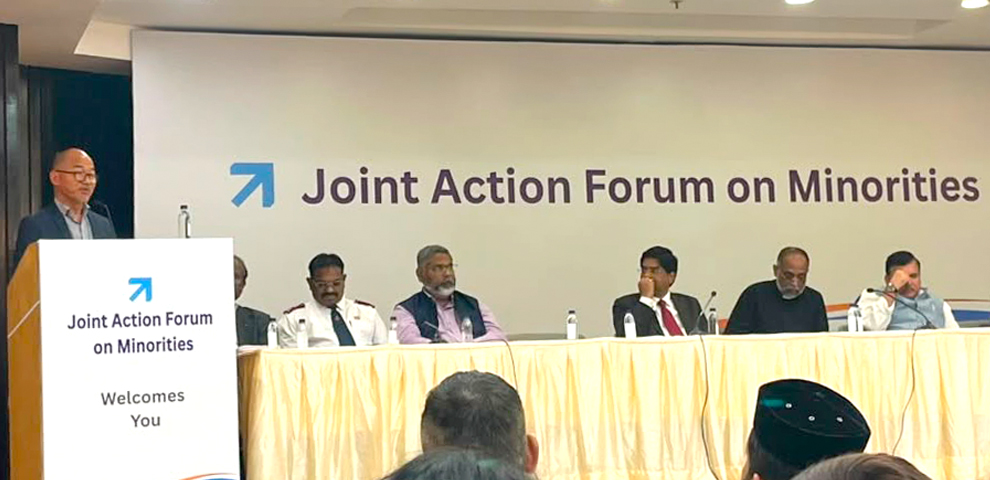
The consultation, chaired by Member of Parliament P. Wilson, brought together MPs, religious leaders, legal experts, representatives of charitable and educational institutions, healthcare professionals, civil society organisations, and minority community leaders to discuss the constitutional, legal, and humanitarian implications of the proposed amendments.
The meeting reviewed the proposed changes to the Foreign Contribution (Regulation) Act (FCRA), examined their constitutional implications, discussed parliamentary engagement ahead of the upcoming Parliament session, and explored legal, organisational, media, and public strategies to address concerns over the Bill.
The churches of Northeast India were represented by Rev. Dr. Namseng R. Marak, Secretary General of the Council of Baptist Churches in North East India (CBCNEI), and Rev. Dr. Meyu Changkiri, General Secretary of the NEICC.
Among those attending were Dr. Farooq Abdullah, A. Raja, Kanimozhi Karunanidhi, Sanjay Singh, John Brittas, Saleng A. Sangma, and other Members of Parliament, who discussed the constitutional issues surrounding the proposed amendments.
Speaking on behalf of the churches of Northeast India, Rev. Dr. Meyu Changkiri thanked P. Wilson and the Joint Action Forum on Minorities for organising the consultation. He said the churches stood in solidarity with those committed to upholding the constitutional values of “justice, liberty, equality, and fraternity.”
The NEICC also acknowledged the government’s responsibility to ensure transparency and accountability in regulating foreign contributions, while emphasising that such measures should safeguard the constitutional rights and freedoms of religious, educational, charitable, and humanitarian institutions. It reaffirmed its commitment to engaging with Parliament, the government, and civil society through constitutional and democratic means.