
Challenges authority behind repatriation claim; asks University to disclose tribal councils’ mandates and review its decision
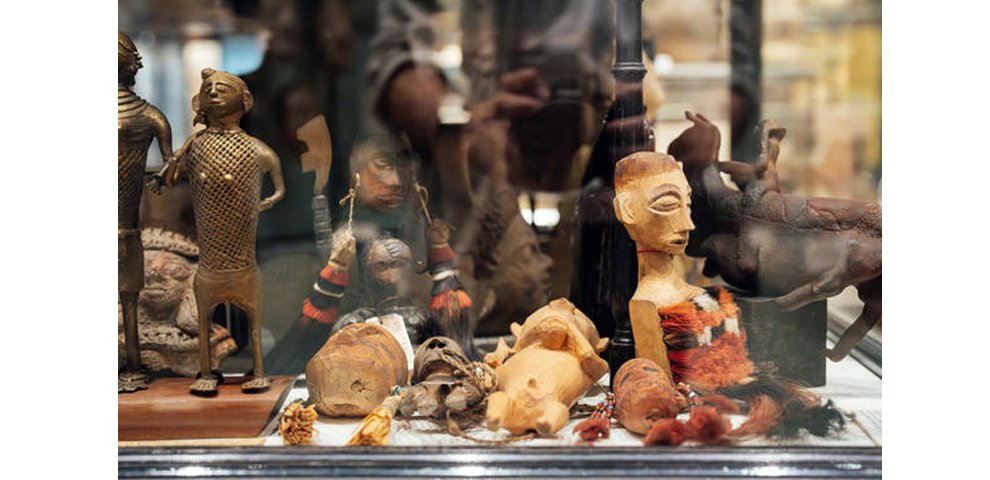
The National Council of Nagaland (NNC), through the Federal Government of Nagaland (FGN), has formally challenged Oxford University’s decision to return 39 Naga ancestral human remains to Nagaland, seeking an immediate suspension of the planned handover scheduled for November 10.
In a representation submitted to Oxford University Vice-Chancellor Professor Irene Tracey on November 4, the FGN questioned the authority under which the repatriation claim was made, the scope of the mandate given to those representing the Nagas and whether the NNC-FGN’s institutional position was considered before the University approved the return.
The challenge comes after Oxford University Council, on July 13, 2026, approved the return of 39 of the 40 ancestral human remains covered by the claim. The University declined to return one further remain, citing the absence of clear evidence establishing its Naga provenance.
READ | Oxford agrees to repatriate 39 Naga ancestral remains from Pitt Rivers Museum
The FGN clarified that its challenge was not a rejection of repatriation in principle but concerned the authority under which the decision was made, the legitimacy and scope of the mandates presented to the University, and whether the historical and institutional position of the NNC and FGN was properly considered.
Questions authority and representation
The FGN said the NNC had publicly communicated its institutional position on September 22, 2025, followed by further correspondence, including a letter dated September 14, 2026. The FGN also wrote to the museum on October 15 and 26, 2026, requesting that the process be held in abeyance and the physical transfer suspended.
It maintained that research teams, academics and intermediaries could facilitate dialogue but their participation did not automatically confer authority to initiate a repatriation process on behalf of the Naga national institution or determine the ultimate disposition of ancestral remains.
The FGN distinguished between community, regional and customary representation and the authority to represent the wider Naga national political and institutional position. It said these were separate forms of authority that should not be treated as interchangeable.
The representation has therefore sought disclosure of the documentary basis on which Oxford recognised the authority of those involved in the claim, and an explanation of how the University considered the NNC’s earlier communication and differing institutional positions.
Seeks details of claimant’s mandate
The FGN has specifically questioned the authority of the Forum for Naga Reconciliation (FNR), which submitted the repatriation claim.
An Oxford Gazette notice published on March 12, 2026, stated that the claimant was “fully authorised by the relevant Naga tribal councils to submit the claim on their behalf.”
The FGN has asked the University to disclose the resolutions, written mandates and formal authorisations relied upon to establish this authority. It has sought details of the tribal Hohos or councils that issued the mandates, the authority under which they acted, the dates and scope of the authorisations, and the specific powers granted to the claimant.
It has also asked whether the constituent bodies were fully informed of the historical and political implications of the claim before granting the authority.
Further clarification has been sought on when the museum first engaged with the FNR, who initiated the engagement, its original purpose and when the organisation’s role evolved from facilitating discussions to submitting a formal repatriation claim.
Challenges Oxford’s reliance on Article 371A
The representation has also challenged the University’s statement that the care of the dead, as a Naga customary matter, is protected by Article 371A of the Constitution of India and that tribal Hohos hold authority over it.
The NNC-FGN rejected the premise that Naga authority over the care and disposition of ancestral remains derives from Article 371A or depends upon recognition by the Government of India or contemporary cultural and non-governmental organisations.
It maintained that such authority is inherent in the historical existence, national sovereignty and institutional framework of the Naga people, which it said is rooted in village-republic traditions and affirmed through the Naga Yezhabo.
The FGN argued that Article 371A cannot be treated as the source of Naga national authority or as a provision that settles the wider Indo-Naga political question.
Places repatriation within wider Naga political history
The representation traced the Naga national institutional framework to the formation of the NNC on February 2, 1946, the declaration of Naga Independence on August 14, 1947, the Naga National Plebiscite of 1951, and the establishment of the FGN and adoption of the Naga Yezhabo on March 22, 1956.
The NNC-FGN maintained that the Indo-Naga political question remains unresolved and argued that the colonial removal of the ancestral remains cannot be separated from the wider history of political conflict, militarisation and human rights violations in Naga areas.
It said the issue should not be treated solely as a cultural or heritage matter, arguing that the custody, protection and eventual disposition of the remains must also be understood in the context of Naga national rights, political authority and historical responsibility.
The FGN further maintained that Oxford’s academic and institutional responsibilities did not give the University authority to determine or redefine Naga national political authority, institutional legitimacy or representation.
Raises concerns over research and preservation
Beyond the question of representation, the FGN has sought access to provenance investigations, previous examinations, research records, assessments of research potential and independent expert advice considered by the University before reaching its decision.
It has questioned whether the cultural and religious importance of repatriation was adequately assessed against the academic, historical and research value of continued preservation.
The representation argued that ancestral skeletal remains were exceptionally scarce in Naga society and could provide rare opportunities for future Naga scholarship and responsible osteological, anthropological and related scientific research.
It said this was not opposition to repatriation but a demand for an evidence-based assessment of the long-term interests of the Naga people, including the possibility of continued preservation at the museum, before any irreversible physical transfer took place.
Questions healing and reconciliation process
The FGN also addressed the principles of healing, reconciliation, forgiveness, unity, solidarity, decolonisation, justice and peace associated with the repatriation process by the claimant and the Pitt Rivers Museum.
It maintained that these commitments required recognition of unresolved grievances and divisions, respect for Naga national and institutional standing, and meaningful engagement with the Naga people.
According to the representation, healing and reconciliation could not be separated from the historical legitimacy and independent agency of the Naga people or their authority to determine matters affecting their collective future.
Demands suspension and independent review
The FGN has placed four principal demands before Oxford University.
These include the immediate suspension of all physical transfer arrangements involving the 39 ancestral remains, including packing, dispatch, release, transportation and handover, with their present custodial status at the Pitt Rivers Museum maintained pending substantive engagement and independent review.
It has also sought full disclosure of the documentary and communications record relating to the process, including the original claim, mandates, authorisations, consultations, assessments, recommendations and institutional decision-making records.
The third demand is a comprehensive written response addressing the objections raised, along with direct engagement with the NNC-FGN before any further action is taken.
The fourth is an independent review by persons unconnected with the original recommendation and decision. The proposed review would examine the claimant’s authority, differing representations, the application of Oxford University’s Human Remains Policy 2006, and the historical, constitutional and political premises underlying the University’s determination.
Seeks wider approach to Naga ancestral remains
The FGN said the challenge extended beyond the 39 remains held at Oxford, raising the wider issue of Naga ancestral human remains and cultural heritage held in museums and institutions outside Naga territories.
It called for a consistent approach founded on proper mandates and a nationally recognised institutional framework.
The proposed handover of the 39 remains was scheduled for November 10, with their arrival in Nagaland expected between November 13 and 15.
The FGN has called upon Oxford University to exercise restraint and address its representation through full disclosure, substantive engagement and independent review before proceeding with the physical transfer.