
Breaking its silence on the controversy surrounding the recent confrontation at Prysm, the Naga Students’ Federation (NSF) on Friday rejected allegations linking the organisation to extortion, announced that it would objectively examine the circumstances leading to the incident before taking any action, and called on the public not to prejudge the matter while investigations are underway.
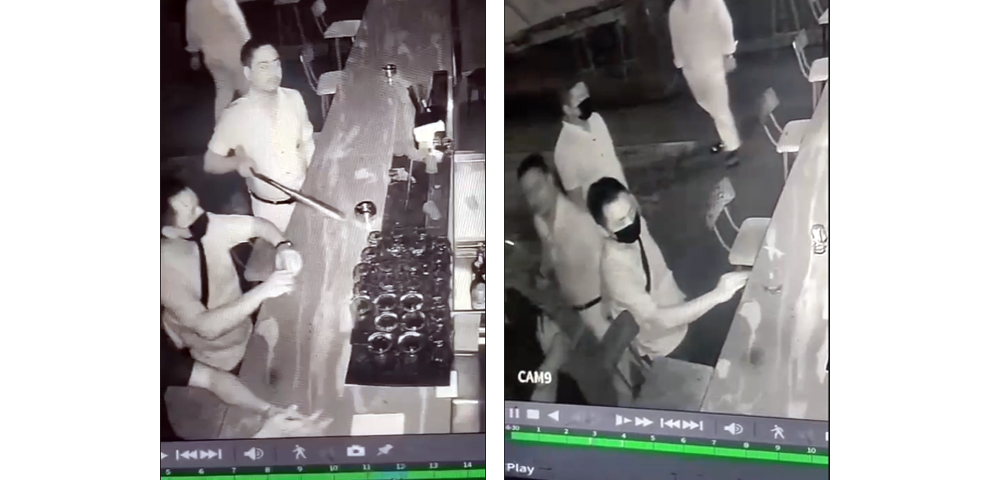
The statement comes amid an ongoing controversy surrounding Prysm Lounge in Dimapur, following the circulation of CCTV footage on social media allegedly showing NSF Finance Secretary Katho P Awomi involved in an act of vandalism at the establishment. The proprietor of Prysm subsequently lodged a complaint with the police, following which a case was registered. The matter is currently under investigation.
The controversy widened after a resolution of the Dimapur Restaurant Union (DRU), referring to a proposal for financial assistance to the Naga Students’ Federation (NSF), surfaced on social media, prompting allegations that the federation had sought monetary contributions from restaurant owners.
However, the DRU president and the owner of Prysm later issued separate public clarifications stating that the NSF neither demanded nor solicited any financial assistance and that the proposal had originated voluntarily from members of the restaurant fraternity.
In a detailed press statement issued on Friday, the federation said it had taken “serious note of the unfortunate incident” that has attracted widespread public attention and the narratives that have subsequently emerged across various media and social media platforms.
At the outset, the NSF said it “neither endorses nor condones any act of vandalism, intimidation, violence or conduct that is inconsistent with the principles and values for which the NSF stands.”
The federation also sought to address allegations of extortion that have surfaced in the wake of the incident, maintaining that the issue had already been clarified by the concerned stakeholders.
According to the NSF, both the President of the Dimapur Restaurant Union and the owner of Prysm had categorically stated that the federation neither demanded nor solicited any financial assistance and that any proposed contribution was discussed voluntarily by the restaurant owners themselves.
“It is, therefore, both surprising and deeply concerning that certain elements and individuals continue to portray the matter as one involving extortion by the NSF,” the statement said.
The federation questioned why public attention continued to remain focused on an allegation that it said had already been publicly clarified. It further alleged that certain individuals were attempting to magnify the issue through “personal opinions, selective commentary and predetermined narratives” that repeatedly placed the federation in a negative light.
“When commentary is allowed to overshadow established facts, it not only misleads the public but also unfairly tarnishes the reputation of institutions and prejudices ongoing processes,” the NSF stated.
The federation said that the issue presently under consideration is the sequence of events that culminated in the confrontation reflected in the CCTV footage and cautioned against drawing conclusions based on selective information or public speculation while the matter remains under investigation.
It stated that it would ensure that all facts and circumstances leading to the reported confrontation are objectively ascertained before any conclusion is reached or disciplinary action initiated.
According to the NSF, every relevant aspect, including the sequence of events, the conduct of all parties involved, the circumstances preceding the incident and the veracity of the allegations made—would be examined fairly.
“The Federation reiterates that any appropriate action shall be taken after the truth has been established through due process and not through trial by media or public conjecture,” it stated.
The federation also argued that the larger issue deserving public attention was the continued operation of establishments allegedly functioning in contravention of the Nagaland Liquor Total Prohibition (NLTP) Act.
It maintained that instead of allowing public discourse to be diverted towards allegations that it said had already been clarified, attention should be directed towards the effective enforcement of the existing prohibition law and the accountability of the authorities responsible for its implementation.
Calling upon the competent civil and law enforcement authorities to explain the measures taken to ensure effective implementation of the NLTP Act and to address reported violations, the NSF said public attention should not lose sight of what it described as the “fundamental issue” while investigations into the recent incident proceed independently and fairly.
The federation further asserted that throughout its history, the functioning of the NSF office has been sustained through the goodwill and voluntary support of well-wishers, former leaders, concerned individuals and organisations.
“At no point has the Federation adopted a policy of extorting, coercing or forcibly demanding financial contributions from any individual, institution or business establishment,” it stated.
The NSF also invited anyone possessing credible evidence that any individual had misused the federation’s name for extortion, coercion or unlawful financial demands to formally submit such evidence before the NSF office, assuring that appropriate action would be taken “without fear or favour.”
The federation further claimed that there were elements attempting to weaken its credibility by associating its name with every controversy without due regard to facts.
Describing itself as one of the oldest Naga organisations, the NSF said it would continue to function with transparency, institutional responsibility and adherence to due process rather than speculation or emotional reactions.
It concluded by appealing to media organisations, civil society and the general public to allow the complete facts to be verified and to refrain from disseminating unverified or selective narratives that may prejudice ongoing investigations or unfairly tarnish the reputation of any institution or individual.