
We often hear the adage about the frog in the well, but understanding its deeper meaning requires more than simply hearing about it. The ancient Chinese philosopher Zhuangzi used the image of a frog confined to a well to illustrate how limited experience can restrict understanding. Having known only its small world, the frog cannot comprehend the vastness of the ocean. Its greatest limitation is not that it lives in a well, but that it cannot imagine a world beyond it.
The lesson remains relevant today. We live in a world where information is readily available, yet access to information does not necessarily make us knowledgeable. It is easy to mistake familiarity for understanding, experience for expertise or a strongly held opinion for established truth. The danger lies not in knowing little, but in believing that we know enough to stop learning. When we stop questioning our assumptions, knowledge becomes a boundary rather than a window.
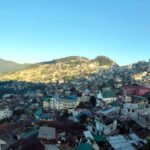
For residents of small towns like Mokokchung, this is an important reflection. Small towns have their own strengths, including close-knit communities, cultural depth and a strong sense of identity. But these advantages should not become reasons to remain intellectually enclosed. The world beyond our well is changing rapidly. Keeping pace requires curiosity, engagement and a willingness to question what we have long taken for granted. Engaging with new ideas and perspectives does not require abandoning our identity. It requires recognising that the world extends far beyond our immediate experience.
Of course, a person in a remote small town may possess more knowledge than someone in a city. Geography determines where we live, not how far our minds can travel. The real boundary is not geographical; it is the mind’s reluctance to look beyond what it already knows.
The distinction lies in our willingness to acknowledge what we do not know. Intellectual humility allows us to listen without defensiveness, reconsider established beliefs and learn without feeling diminished. Without it, even education and exposure can reinforce narrow thinking.
No individual or community has a monopoly on knowledge. The willingness to question ourselves is therefore as important as the willingness to question others.
What matters is not how large our world is, but how willing we are to explore beyond it. A small town need not produce a small mind. But unless we look beyond the well, we will never understand the ocean.