

12 towns identified under new urbanisation strategy
Nagaland has started to plan a long-term urban development framework that will guide how towns across the State grow over the next 25 years, from 2025 to 2050, signalling a shift towards structured planning of urban expansion.
The process was discussed at a consultative meeting held at Chumoukedima on April 17, as part of the preparation of the Nagaland State Urbanization Strategy, being undertaken by the Department of Urban Development with the North Eastern Development Finance Corporation Ltd (NEDFi) as the nodal agency and funding support under the Techno Economic Development Fund (TEDF).
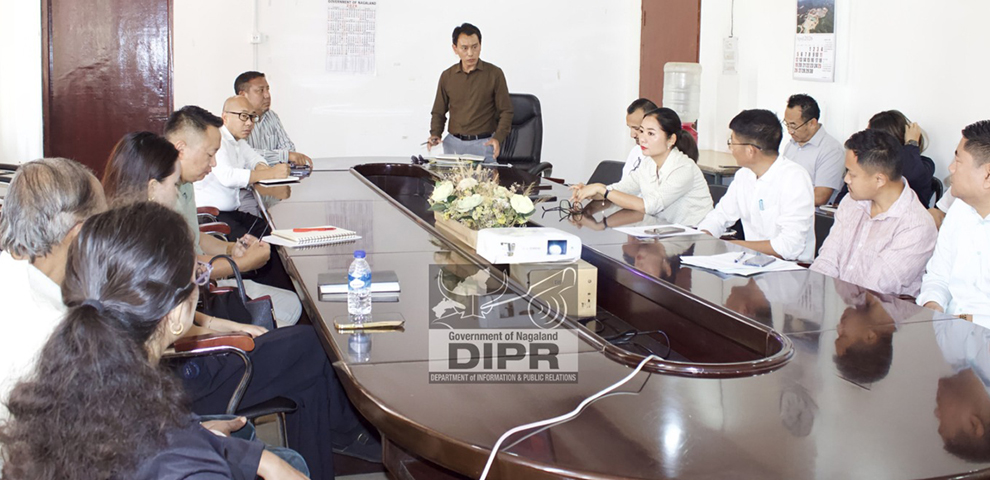
Additional Director, Urban Development, Petevilie Khatsu, who chaired the meeting, said the State is moving towards a comprehensive strategy for planned urban growth and identified 12 towns as potential urban centres under the study: Kohima, Dimapur, Chumoukedima, Zunheboto, Niuland, Tuensang, Mon, Meluri, Mokokchung, Tuli, Jalukie and Bhandari.
He said the objective is to address unplanned growth by introducing structured planning for land use, infrastructure and urban expansion across these locations.
A detailed background study was presented by Prof Utpal Sharma of MaRS Planning and Engineering Services Pvt. Ltd., Ahmedabad, who highlighted emerging urbanisation challenges in the State, including poor land use planning, inadequate infrastructure, traffic congestion, unregulated settlements and environmental pressures.
He noted that Nagaland’s economy remains largely agrarian with a growing service sector, while the industrial sector continues to be underdeveloped. He also pointed to the absence of statutory master plans in most urban areas and limited financial capacity of Urban Local Bodies as key structural constraints.
He stressed the need for improving infrastructure, strengthening regional connectivity and promoting sustainable, community-driven urban development.
In the case of the Greater Dimapur Planning Area, he highlighted issues such as congestion in core urban zones, unplanned commercial growth along major roads, weak road hierarchy, lack of public amenities and uncontrolled peri-urban expansion.
Officials during the deliberations stressed the need for proper master planning as essential to address growing urban pressures across the State.
In the case of the Greater Dimapur Planning Area, he highlighted issues such as congestion in core urban zones, unplanned commercial growth along major roads, weak road hierarchy, lack of public amenities and uncontrolled peri-urban expansion.
Officials during the deliberations stressed the need for proper master planning as essential to address growing urban pressures across the State.
Additional Director, Urban Development, Petevilie Khatsu, in his concluding remarks, stated that more consultative meetings would be held in the future to further deliberate on the urbanization strategy and ensure inclusive and sustainable urban development in the State.