
Advisor Temjenmenba makes first-year livestock insurance free for 29 Jangpetkong AC farmers
Livestock is emerging as a rural development priority in Mokokchung, with 29 Jangpetkong Assembly Constituency on May 9 launching a LADP-backed Livestock Insurance Scheme at Khar village, days after similar livestock-centred efforts in Asetkong range under Impur Assembly Constituency. The back-to-back initiatives suggest growing district-level attention on livestock as both an economic and development priority.
Advisor for Transport and Technical Education Temjenmenba announced that farmers’ 15 per cent premium contribution under the National Livestock Mission would be fully covered for the first year through the Local Area Development Programme (LADP), effectively making the scheme free for eligible beneficiaries during that period.
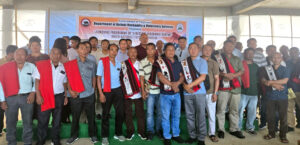
Implemented under the National Livestock Mission (NLM), the scheme is aimed at protecting livestock farmers from financial losses caused by animal deaths. Under the model, farmers are required to contribute 15 per cent of the insurance premium, while the remaining 85 per cent is subsidised by the Centre and State governments.
By covering the beneficiaries’ share through LADP, Temjenmenba has made the scheme free for eligible livestock rearers in Jangpetkong during its first year.
The scheme covers cattle, buffaloes, sheep, goats, and pigs, with vaccination and ear-tagging made mandatory for eligibility.
Delivering the keynote address, Director of Animal Husbandry & Veterinary Services Dr Kuokehebi Gwirie said the scheme was launched after much deliberation for the welfare of villagers and livestock farmers.
He informed that Nagaland currently has more than four lakh pigs, while cattle numbers in the state, which previously stood between one lakh and 1.2 lakh, have been declining.
Dr Gwirie said livestock numbers are monitored through vaccine dose records and noted that there are specified allocations for vaccine distribution.
He further clarified that while fixed compensation amounts exist under the insurance scheme, market value of animals would also be considered during claim settlements. He added that officers are being trained to ensure deserving beneficiaries are not deprived of claims.
Dr Gwirie also stated that only preventable diseases for which vaccines are available would be covered under the insurance model. Diseases such as African Swine Fever (ASF), which currently has no vaccine, remain outside the scheme’s coverage.
According to him, the Government of India has set a target of 3,000 livestock units each for Nagaland for 2025-26 and 2026-27 under the program, with one unit equivalent to five pigs or ten goats.
ALSO READ | Inside Asetkong’s LADP- funded piggery plan: Can it deliver?
Addressing the gathering, Temjenmenba described the initiative as a significant step for 29 Jangpetkong Assembly Constituency, stating that while Nagas are among the highest consumers of meat, livestock farmers frequently face serious economic setbacks due to recurring diseases and outbreaks.
He said many farmers still rely heavily on traditional practices without scientific or technological support and encouraged villagers to embrace vaccination and scientific livestock management.
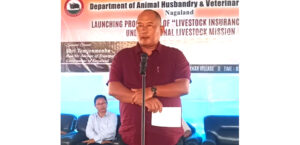
Temjenmenba also announced Khar village as the central implementation hub for the constituency and urged departmental officials and insurance agencies to simplify procedures so that village-level farmers can easily access benefits.
Speaking from an entrepreneurship perspective, piggery entrepreneur Imtiakum from Dibuia also highlighted the importance of securing livestock investments and promoting scientific farming practices.
With livestock deeply tied to Nagaland’s food habits, rural livelihoods, and economic resilience, recent initiatives in Asetkong and Jangpetkong may signal that Mokokchung is beginning to view livestock not merely as tradition, but as a more strategic development priority.