

The Road to Tiyong draws from Brown’s family life at their Satier farm to give local children a story rooted in their own surroundings
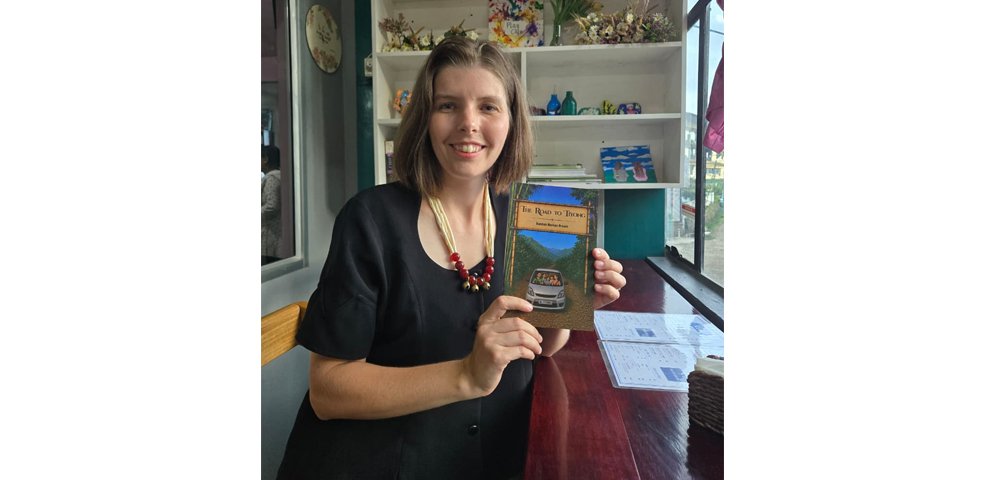
Hannah Roshan Brown’s new book, The Road to Tiyong, draws from her experience with her three children, their growing attachment to phones and the time the family spent together at their farm in Satier, Aliba village.
Brown, a mother of three, said her children, like many others, had become used to asking for the phone as soon as they returned from school.
“We got into this habit of just giving it (phone) because it was the easiest thing to do,” she said.
“If we don’t give it to them then it would kick up a fuss,” she said, adding that it became disturbing for the parents when the children made a fuss.
After some time, however, Brown realised her children were missing out on “key parts of childhood”.
She remembered her own childhood, when children went out to play, visited neighbours, got dirty and did “silly, mischievous things”. She said those were the experiences that stayed with her.
During the 2021 lockdown, Brown and her family spent three months at their farm in Satier. She said the family had many experiences during that time and learnt a lot.
“We realised that our kids will never stay young forever,” she said.
That was when Brown decided she wanted to document some of those experiences.
The family already shares parts of their life through their YouTube vlog, The Imchen Family, but Brown wanted to preserve those experiences in a book as well.
“They are going to grow up so quickly,” she said.
Brown said every time the family returns to the farm, they end up doing slightly different things depending on the children’s age. She wanted to record those experiences and the way her children behaved and interacted with their surroundings at different stages of their childhood.
Brown said putting the phones aside also gave her children more time to go out and play with neighbouring children, ask questions and think about life.
These experiences went into The Road to Tiyong, a fictional book written for both children and parents.
Brown said the book is about family, love and sharing experiences together. She also wants parents to make “intentional decisions” to spend time with their children.
The story is based around a fictional family and place, although it draws from Brown’s own family experience at the Satier farm.
The place is called Tiyong. Brown said “Tiyong” means “centre” in Ao (Mongsen), because the farm had become the centre of their lives whenever the family went there.
The name is also a tribute to her husband’s grandfather, who was named Tiyong.
Brown said she wanted the book to be something children here could relate to.
She said children have books around them in schools and homes, but many of the stories are based in Western settings. She wanted to give children characters and experiences that they could recognise and imagine themselves doing.
The book also uses Ao Mongsen language.
Dr Bendangrenla, Assistant Professor at Fazl Ali College (FAC), who proofread the book, credited Brown for incorporating the language into the book.
“Loss of language is also loss of culture,” Dr Bendangrenla said.
She also spoke about the importance of holding on to children at a time when society is becoming increasingly individualistic.
The Road to Tiyong was released on August 18, 2026 by her father-in-law Lanukaba at The Play Cafe, which was founded by Brown and her family.
The book is available for Rs 250 at The Play Cafe, Natta Company (next to FAC bus stand). Delivery is also available, with delivery charges applicable.
Brown said she hopes to continue documenting the family’s experiences and may consider a sequel if readers enjoy the book.