
Processing mill proposed as State expands plantations under national edible oil mission
Nagaland has set a long-term target of around 15,000 hectares for oil palm cultivation, with the Agriculture Department focusing on fertile foothill regions and cultivable wastelands under rain-fed conditions.
The target was highlighted during the launch of the “Mega Oil Palm Plantation Drive” under the National Mission on Edible Oils-Oil Palm (NMEO-OP) 2026-27 at the office of the Sub-Divisional Agriculture Officer, Baghty, on Thursday.
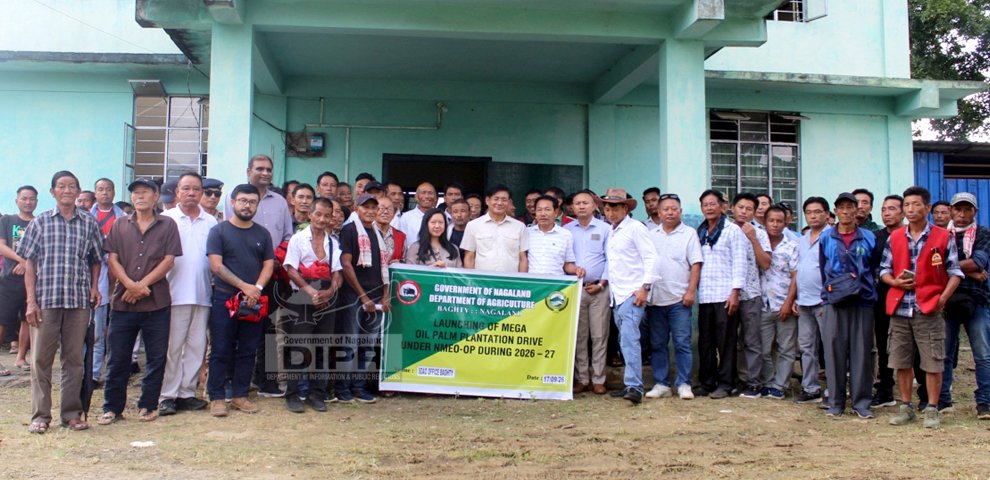
Advisor for Agriculture Mhathung Yanthan said the oil palm plantation drive could provide farmers with another opportunity to establish a long-term agricultural enterprise and create an additional source of income.
Encouraging farmers already engaged in cash crops such as coffee and rubber to consider oil palm as an additional crop, Yanthan said it could provide a second source of revenue and help offset losses in the event of crop failure or environmental stress.
He said the State government had entered into a partnership with implementing agencies for the oil palm mission, with the farming community playing a central role in the programme.
Yanthan also said a processing mill was expected to be set up in Nagaland by implementing agency Godrej Agrovet. He said consultation with Chief Minister Neiphiu Rio was underway to earmark 30 acres of land for the facility.
According to Yanthan, once the processing mill is established, harvested oil palm fruits would be processed within the State. He said this would help provide farmers with a market for their produce and contribute to value addition within Nagaland.
Deputy Director of the Agriculture Department Ronchamo Kikon said the State’s long-term target of around 15,000 hectares would focus on foothill regions and cultivable wastelands under rain-fed conditions.
He said the plantation program would seek to avoid disruption of primary forest areas.
Kikon also urged farmers to base their decisions on scientific information and cautioned them against what he described as negative campaigns made without proper scientific evidence and experimental knowledge.
During the program, Yanthan said farmers could avail themselves of free quality planting materials, maintenance assistance during the first three to four years of the crop’s gestation period, financial assistance for intercrops before oil palm begins fruiting, and tools and equipment.
Senior Officer of Godrej Agrovet, Nagaland, Dr Benjongtoshi Imchen, made a presentation on the scope and marketing potential of oil palm cultivation, covering the implementation of the mission, financial incentives and subsidies, production, marketing and farmer support.
Yanthan recalled his involvement in the initial years of rubber cultivation in Wokha district, particularly in Baghty, as an alternative cash crop to help farmers move from shifting cultivation to settled farming.
He said Wokha had since emerged as one of Nagaland’s leading rubber-producing districts, with thousands of households across several villages engaged in the sector.
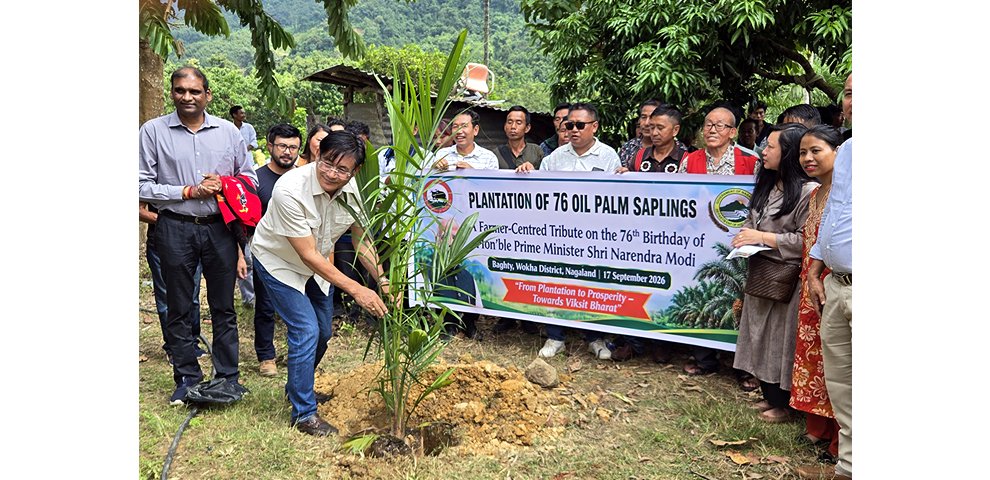
The program also saw the planting of an oil palm sapling by Yanthan at the SDAO office premises as part of a “Farmers-Centred Tribute” to Prime Minister Narendra Modi on his 76th birthday.
Yanthan also announced that two additional Sub-Divisional Agriculture Officer offices would be established in Wokha district, with one proposed at Sanis and the other at Ralan, to assist farming communities and strengthen the functioning of the Agriculture Department.