

‘Green Gold Barn’ opens as Nagaland looks to expand bamboo economy
Nagaland has identified the potential for creating bamboo economic zones in Dimapur, Niuland, Chümoukedima and Peren, with concentrated plantation and resource development linked to future industrial units, Nagaland Bamboo Development Agency (NBDA) Chairman Nuzota Swuro said on Friday.
Speaking at the observance of World Bamboo Day 2026 at the Nagaland Bamboo Resource Centre (NBRC), Sovima, Swuro said the bamboo sector had increasingly emerged as an avenue for enterprise, employment, innovation and sustainable development in the State.
He said the focus of the NBDA had expanded beyond bamboo plantation since its establishment in 2005 to include skill development, processing, value addition, enterprise creation, technology intervention and market development.
Swuro said the Agency had established two Common Facility Centres, which had generated employment for more than 500 people. He stressed the need to strengthen market linkages so that bamboo products from Nagaland could reach wider national and international markets.
He also called for greater participation of youth in the bamboo sector, saying bamboo entrepreneurship was no longer limited to farming and traditional craftsmanship but extended to areas such as design, engineering, architecture, food processing, digital marketing and technology.
“Scientific harvesting, value addition, innovation and organised value chains” were needed to make bamboo a stronger source of livelihood for rural communities, Swuro said, calling for a coordinated approach to the sector.
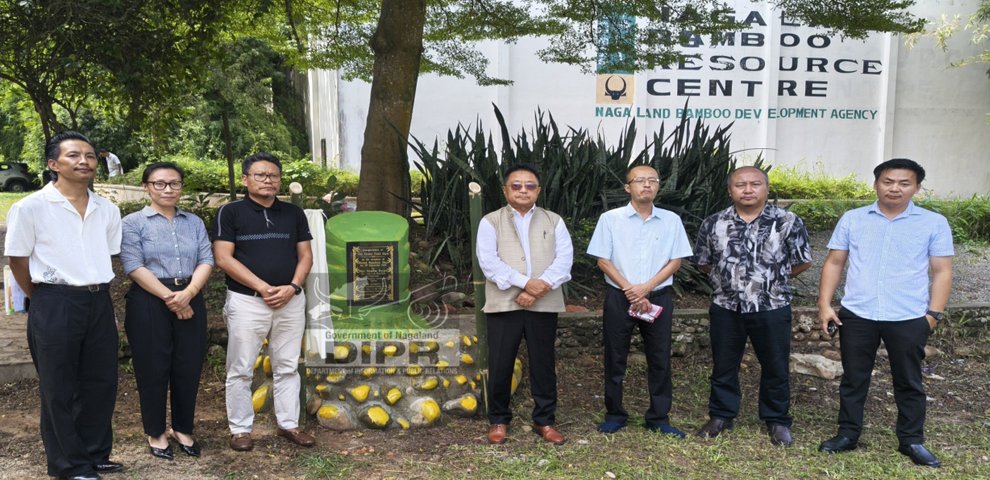
The World Bamboo Day programme, organised under the theme “Bamboo Beyond Borders”, also saw the inauguration of the Green Gold Barn at the NBRC.
NBDA Mission Director Tiameren Chang said the new facility represented an effort to combine traditional bamboo knowledge with technology and innovation for more efficient utilisation of the resource. He said the facility would cater to the public and would be opened for public use in the near future.
Chang said NBDA’s activities included block plantation covering 1,506 hectares, training of more than 200 entrepreneurs and artisans, two Common Facility Centres, primary processing units, 30 rural bamboo haats, 30 bamboo bazaars and 15 demonstration plots across the State.
He said the Agency’s participation in trade fairs and exhibitions, as well as the annual Hornbill Bamboo Carnival, had provided platforms for artisans and entrepreneurs to showcase and promote their products.
Meanwhile, Dr Jayanta Choudhury, Professor and Head of the Department of Rural Development and Planning at Nagaland University’s Medziphema Campus, proposed the introduction of diploma and vocational courses related to bamboo at the university to strengthen skills and knowledge in the sector.
Choudhury spoke on bamboo cultivation, nursery development and utilisation, and highlighted the potential of bamboo-based biochar in Nagaland. He also stressed the need to explore bamboo’s domestic, industrial and commercial applications and its potential contribution to addressing climate change.
He called for greater collaboration among bamboo agencies across the Northeast, saying coordination and collective efforts would be necessary for the region to compete in wider markets.
Certificates were also distributed to trainees who had completed vocational skill development courses at the centre.