
LEMSACHENLOK and a team from the Zoological Survey of India (ZSI) have discussed gaps in biodiversity documentation and research in Longleng, with emphasis on strengthening scientific data, community participation and conservation efforts.
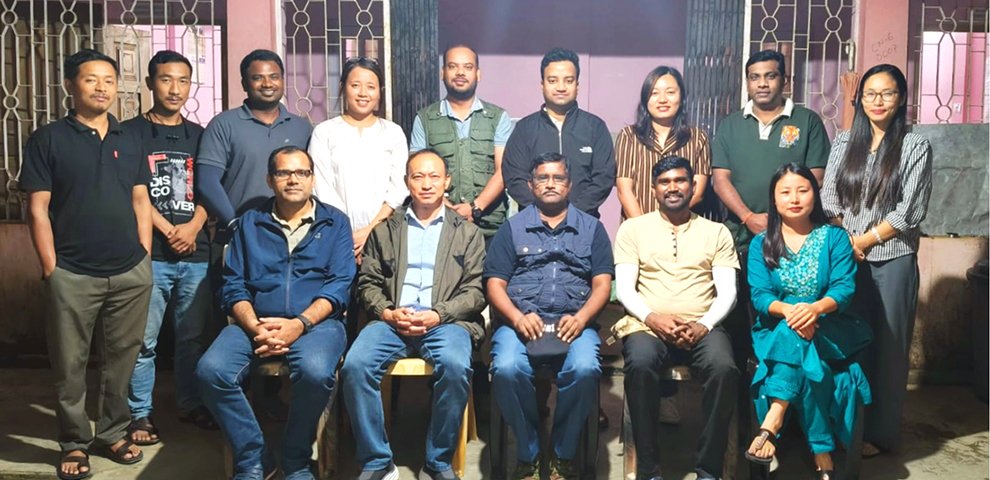
The knowledge exchange, held as part of International Wildlife Week 2026, was led by ZSI Senior Scientist-E Dr D Suresh Chand and focused on the status of wildlife in Nagaland, existing knowledge gaps and possibilities for future field studies.
According to LEMSACHENLOK, the ZSI team indicated that available published data and scientific information could be made accessible to support local conservation initiatives. Such information could help identify species requiring particular conservation attention and improve understanding of the distribution and conservation status of endangered and other important species.
The discussions also noted that several areas of Nagaland remain relatively unexplored, with participants identifying the need to document research gaps and undertake further field studies, including on less-studied groups, microorganisms and wetlands.
Strengthening People’s Biodiversity Registers (PBRs) was another focus. Participants stressed the importance of documenting locally observed species along with details such as location, photographs, habitat and traditional ecological knowledge.
The role of Village Councils and community institutions in biodiversity research and conservation was also highlighted. Researchers and collectors were encouraged to follow appropriate procedures and obtain permission from concerned community institutions when undertaking fieldwork.
ZSI expressed willingness to support LEMSACHENLOK through knowledge sharing, technical guidance and capacity building in biodiversity documentation and data collection.
Separately, LEMSACHENLOK and Kalpavriksh, Pune, held a community stakeholder discussion on the “Territories of Life” self-strengthening support programme, focusing on grassroots protection and restoration of biodiversity and biocultural heritage.
The discussion also explored participatory research linking local biodiversity mapping with wider policy frameworks aimed at protecting Indigenous rights, knowledge and community-led conservation practices.