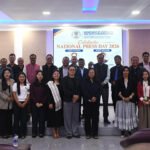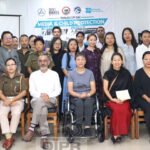

Moving beyond press releases, official handouts and routine reporting to undertake deeper scrutiny of public issues and those in positions of authority was among the key challenges raised by senior journalist H. Chishi during the National Press Day observance in Kohima on Monday.
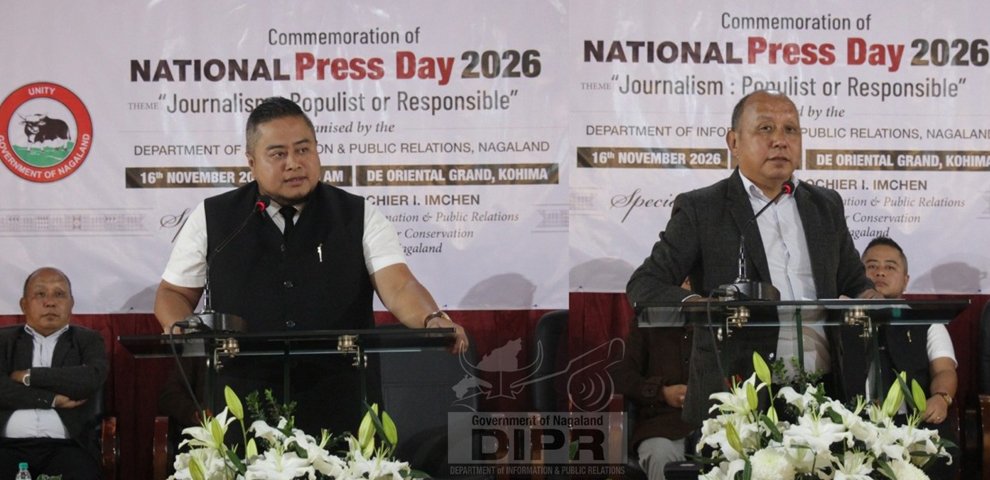
Speaking on behalf of the media fraternity at the state-level commemoration organised by the Department of Information and Public Relations (DIPR), Chishi said the changing media environment required journalists to place greater emphasis on verification, contextual reporting, analysis and meaningful storytelling rather than simply participating in the race to break news.
He observed that the growing influence of corporate and political interests, populism and the rapid expansion of social media were affecting the credibility and independence of journalism.
Chishi expressed concern that some mainstream media organisations were increasingly shifting towards serving political and corporate interests rather than questioning those in power.
He said the traditional practice of merely reporting statements and counter-statements was no longer sufficient to sustain mainstream media in the changing information landscape.
His remarks pointed to a fundamental question about the role of journalism: whether media organisations were merely relaying what authorities and other influential individuals said, or independently examining the issues behind those statements.
The challenge of holding power accountable was also highlighted by journalist and Trustee of The Reporters Collective Trust, Nitin Sethi, during the Dimapur Press Club’s observance of National Press Day.
Describing journalists as interlocutors between different worlds and realities, Sethi said their responsibility was to bridge the gap between the powerful and the powerless. Although journalists often lacked resources and influence, he said society expected them to question those in authority and make them accountable to the most vulnerable sections.
Sethi also drew attention to the particular difficulties faced by journalists in Nagaland and other parts of the Northeast, where community relationships and political realities could complicate reporting.
He said journalists sometimes faced pressure from community groups and influential individuals not to report on certain issues or personalities on the grounds of community identity. Such pressures, he observed, made it particularly demanding for journalists to balance professional responsibilities with complex social and political realities.
Meanwhile, Advisor for Information & Public Relations, Daochier I Imchen, during the National Press Day observance in Kohima, said the press must serve as a bridge between the government and the public, giving voice to the concerns and aspirations of farmers, unemployed youth, entrepreneurs and neglected villagers.
He emphasised the need for constructive journalism that not only highlights challenges but also explores solutions, promotes understanding and inspires positive change.
Imchen cautioned against sensationalism and the tendency to prioritise popularity over credibility, stating that the true measure of journalism lay not in the number of headlines or controversies generated, but in the trust it commanded and the positive difference it made in society.
Across the discussions, speakers stressed that responsible journalism required more than reporting what was said. It demanded independent scrutiny, verification and a willingness to question authority, including when doing so involved uncomfortable political or social consequences.