
With smartphones and social media allowing almost anyone to record, publish and distribute information within minutes, the distinction between professional journalism and content creation is increasingly being tested, placing greater importance on verification, editorial judgement and accountability.
Editor of Ao Milen, Akangnungsang Jamir, raised the issue while addressing the National Press Day observance at Nagaland University, Lumami, on Monday, observing that the ability to publish information did not necessarily make someone a journalist.
Recalling how news was traditionally gathered and published, Jamir said that earlier, when an incident occurred in a village, a reporter would visit the location, gather facts, verify them and publish the story the following morning. Today, he said, anyone with a smartphone could record an incident and upload it within minutes, often reaching thousands of viewers before a reporter arrived at the scene.
He said what distinguished a professional journalist from a content creator was the responsibility to establish accuracy, corroborate sources, understand context and ensure fairness.
“Being first means nothing if the report is false,” he said, emphasising that while speed mattered, accuracy remained the defining responsibility of journalism.
Jamir, who traced his own professional journey from reporting and translation to sub-editing and eventually editing, said he had witnessed the industry’s transition from traditional print and physical distribution to digital editions, social media reporting, Reels, YouTube and podcasts.
He acknowledged that technological developments had changed the way journalism was practised but maintained that the obligation to report facts accurately and remain accountable to readers had not changed.
He also cautioned against the growing threat of artificial intelligence, noting that generative AI had made misinformation easier to produce and circulate. Synthetic images, cloned voices and fabricated videos of public figures could spread widely before their authenticity was established, making human verification more important.
Jamir said AI could assist journalists with transcription, translation and data analysis, but it could not independently undertake the fieldwork required to interview witnesses, visit remote locations or verify official records. Nor could an algorithm bear moral or legal responsibility for published information.
At the Dimapur Press Club’s National Press Day observance, journalist and Trustee of The Reporters Collective Trust, Nitin Sethi, also addressed the changing media landscape, particularly the emergence of platforms such as YouTube and Instagram.
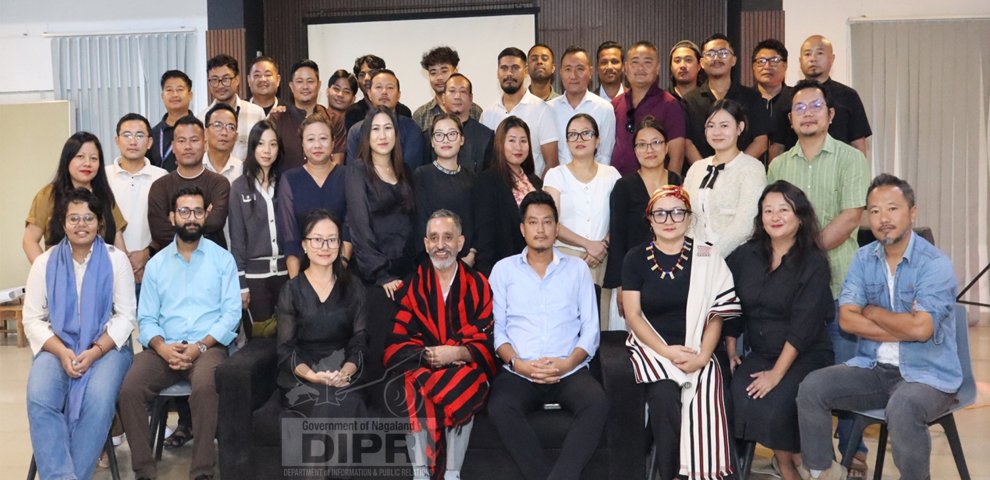
Tracing journalism’s evolution from pamphleteering and opinion-based publications to established newspaper institutions, Sethi said technological developments had once again democratised the media space by enabling individuals to produce and distribute content with minimal resources.
Rather than dismissing emerging digital platforms and independent content creators, he urged traditional media organisations to engage with them through greater dialogue and cooperation, allowing different media practitioners to exchange views even when they disagreed.
Sethi also drew from his experience of successive technological transitions, from the printing press and computers to mobile phones and artificial intelligence, saying that every major development had initially generated apprehension among media professionals.
He encouraged journalists and media organisations to continuously learn new skills and adapt to technological changes instead of resisting them.
Meanwhile, senior journalist H Chishi, speaking at the state-level National Press Day commemoration in Kohima, highlighted how citizen journalism, independent digital platforms, YouTubers and podcasters had transformed the media environment.
He said the growing presence of such platforms had made it increasingly difficult for audiences to distinguish credible reporting from opinion and misinformation, calling for stronger digital literacy, critical thinking and adherence to professional ethics.
Chishi also underscored the continuing importance of print media, saying newspapers continued to provide comprehensive and reliable information and maintain a sense of trust and credibility despite growing digital competition.
The discussions highlighted that while social media has expanded access to information and enabled more people to participate in public communication, the responsibility of verifying information and ensuring accountability remains central to professional journalism.