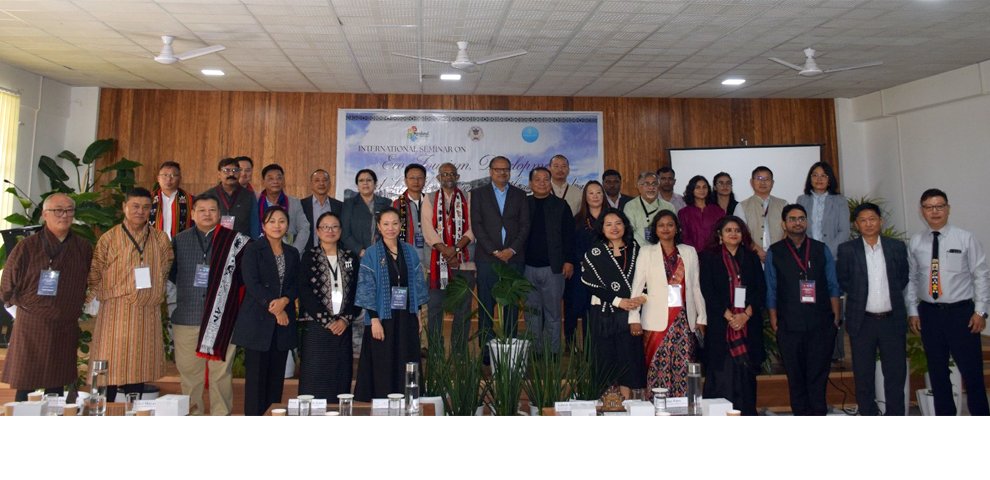

The need to balance tourism-led economic opportunities with environmental conservation, cultural preservation and community interests featured prominently at an international seminar on “Ecotourism, Livelihood and Development in Northeast India” inaugurated at Nagaland University on November 19.
The two-day seminar, jointly organised by the Departments of Sociology and Geography, brought together academics, policymakers and environmentalists to examine the implications of tourism for local communities and sustainable livelihoods.
Vice-Chancellor Prof. J.K. Patnaik cautioned against the commercialisation of ecotourism, raising concerns over whether tourism revenue reaches local communities or primarily benefits commercial operators. He stressed that development policies must protect indigenous livelihoods and traditional cultures.
Commissioner and Secretary, Department of Tourism, Nagaland, Kovi Meyase, highlighted the state’s potential in ecotourism, cultural tourism and community-based tourism. He pointed to homestays, local entrepreneurship, infrastructure improvement and plastic waste reduction as areas requiring attention, emphasising direct community participation in tourism initiatives.
Delivering the keynote address, environmentalist Ashish Kothari called for alternatives to conventional development models that often cause environmental damage and displace local communities. Citing community-led initiatives in organic farming, conservation and alternative education, he stressed local decision-making, traditional knowledge and self-reliance.
He maintained that ecotourism should complement existing livelihoods rather than become communities’ sole source of income.
The seminar continues on November 20 with academic presentations and further discussions.