

In the heart of Nagaland, the spirit of collective action has always been a lived reality. For generations, villages have thrived on the principle of mutual support, in maintaining and management of community assets. However, these deep rooted practices though practiced within the community has not been recognized and often remained nameless within the structures of modern development. Today, a new framework is giving this inherent cultural value or practices a formal identity known as Community Social Responsibility or ComSR.
The concept of ComSR was envisioned and coined by the Zunheboto Forest Division under the leadership of the Obed Bohovi Swu, SFS, Divisional Forest Officer cum DMU Head. It represents a fundamental shift in mindset. For a long time, development was often perceived as an external process primarily managed by government agencies or NGOs. ComSR flips this narrative, transitioning the role of the villager from a passive beneficiary to an active stakeholder. While the department provides the initial spark and the technical framework, the long term sustainability of progress rests in the hands of the people.
The uniqueness of ComSR is defined by its three pillars of Shared Responsibility, Collective Ownership, and Sustainable Action. This framework is not limited to a single sector but extends across environmental conservation, social development, and the growth of local livelihoods. It is about a community recognizing its own value and taking charge of its future assets. Under ComSR, whether the task is protecting a forest or strengthening the local economy, the effort is viewed as an investment in a shared heritage rather than a task for an outside agency.
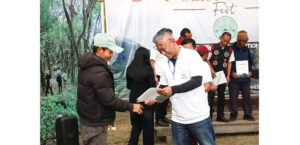
This philosophy was put into practice during the three-day Satoi Connect Fest. This initiative served as a powerful tool for empowerment, helping to build the social capital necessary for long-term growth. While the Forest Department facilitated the planning and arrangements, the true success was found in the wide-ranging community participation, ranging from village leaders and elders to the active involvement of youth and women groups. By hosting the program and taking ownership, the people of Satoi moved beyond being simple spectators. This partnership proved that while communities possess great internal strength, they often reach their full potential when supported by professional facilitation and a trustworthy guide to help navigate new challenges.
This broad approach is already showing results in different areas of community life. For example, recent initiatives focusing on traditional knowledge and indigenous medicine show that the people are eager to protect their roots alongside their natural resources. These activities demonstrate how ComSR creates a platform where different sectors of development can meet and flourish. It highlights the fact that true progress is a collaborative journey where the department acts as a mobilizer to help the local will succeed in building a balanced and self-reliant future.
The core objective of ComSR is to build resilient communities where collective action becomes the standard for development. The goal is to establish a community-driven model where the people are no longer passive beneficiaries but have become the primary force and active custodians of their own lands and livelihoods. It serves as a reminder that the strongest force for sustaining progress is a community that is empowered, inclusive, and supported by professional guidance.
This represents a shift toward a culture of “We Before Me,” where community service becomes a social norm and a shared ethic. By fostering this mindset, we build resilient communities where people, culture, and nature thrive together. ComSR is not just a scheme or a project. It is a movement. A movement where development is not outsourced, where conservation is not optional, and where responsibility begins with us.
Nikina M Chishi
Planning and Livelihood Expert
NFMP DMU Zunheboto
(The views expressed are those of the writer and not of the newspaper)



Điều khiến mình thích slot365 đăng nhập là hệ thống hoạt động mượt kể cả buổi tối. TONY06-10
Điều khiến mình thích slot365 đăng nhập là hệ thống hoạt động mượt kể cả buổi tối. TONY06-10