

The Department of Zoology, Nagaland University, in collaboration with ICAR-National Bureau of Fish Genetic Resources (NBFGR), Lucknow, organised the second day of its Awareness-cum-Capacity Building Programme on fisheries development and sustainable aquaculture at the university’s Lumami campus on August 1.
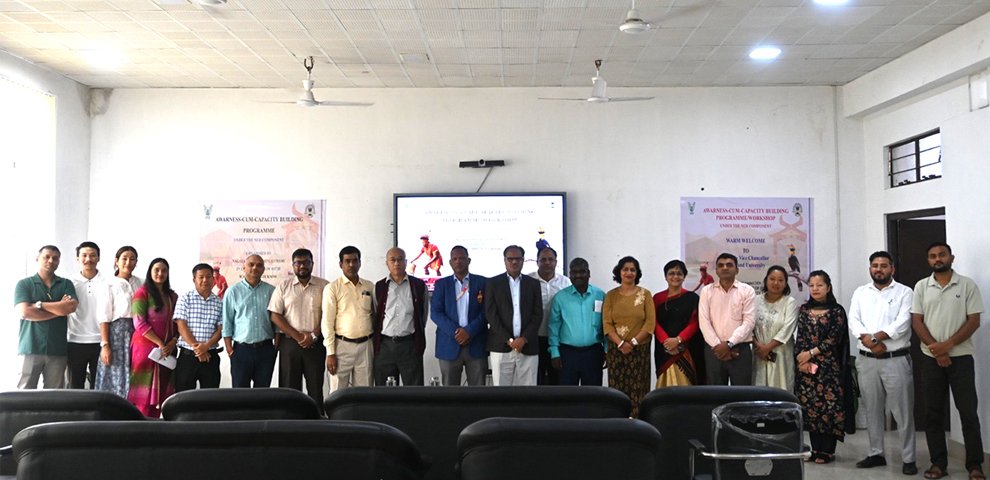
Welcoming participants, organising secretary Dr. Pranay Punj Pankaj highlighted the programme’s field visit to Japu village, where researchers interacted with fish farmers, self-help groups and other stakeholders. Fishery inputs were distributed and discussions focused on improving scientific fish farming practices in the region.
According to Dr. Pankaj, farmers raised concerns about pond water quality, stocking density, feeding practices, disease management, affordable fish feed alternatives and identifying fish species at the juvenile stage. He said the initiative, launched after Vice-Chancellor Prof. Jagadish K. Patnaik flagged off the fishery input distribution programme, aims to promote sustainable aquaculture and improve livelihoods. “Despite the state’s rich biodiversity and abundant water resources, Nagaland continues to depend heavily on fish imported from other states,” he noted, adding that this presents opportunities for local farmers and entrepreneurs.
Dr. Jaya Kishor Seth praised the department for extending academic activities beyond the campus and engaging with local communities. He said the programme supports the Sustainable Development Goals, the Skill India Mission and the vision of Viksit Bharat 2047, while stressing the importance of freshwater fisheries for biodiversity, food security and economic development.
Addressing the gathering, Prof. Patnaik said the initiative reflects the principles of the National Education Policy 2020 through community engagement and skill development. He encouraged students to pursue entrepreneurship alongside conventional employment and proposed establishing a fish pond on the university campus to strengthen research, practical training and skill development.
The programme was chaired by Dr. Neelakshi Verma. Prof. Ranjit Kumar and Prof. Bendang Ao delivered the introductory address, while Dr. Ramita Sougrakpam proposed the vote of thanks.