

New Delhi reiterates call for Rohingya repatriation as international reactions to landmark ruling remain divided
India has taken note of the International Court of Justice’s (ICJ) landmark judgment holding Myanmar responsible for genocide against the Rohingya, but stopped short of explicitly referring to the genocide finding, instead reiterating its call for the safe, speedy and sustainable return of displaced refugees to Rakhine State. The ruling marked the first time the ICJ had held a state responsible for genocide.
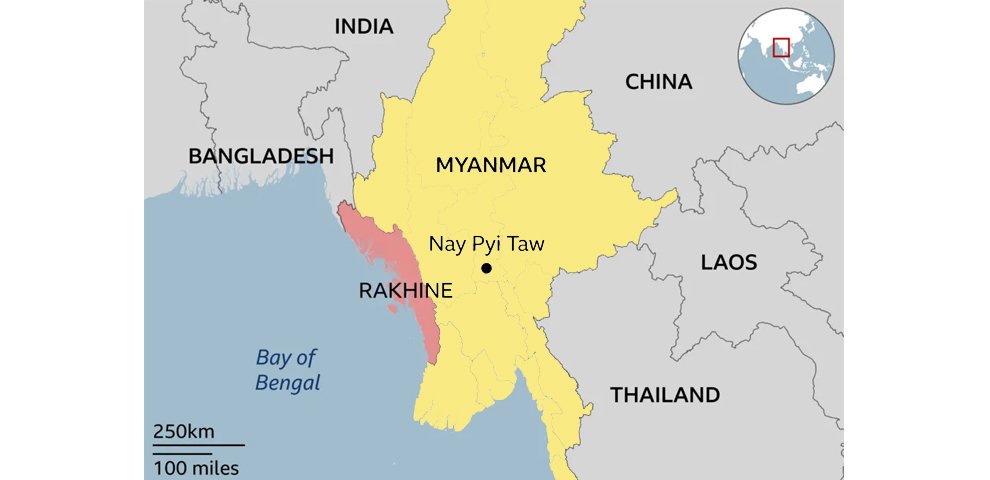
Ministry of External Affairs spokesperson Randhir Jaiswal said on Friday that India had consistently supported the return of Rohingya refugees and had provided humanitarian assistance to camps in Bangladesh through five consignments of relief supplies under Operation Insaniyat. India had also supported the Rakhine State Development Programme in Myanmar.
Jaiswal made no reference to the court’s specific finding of genocide, which was delivered by a 9-6 majority in connection with Myanmar’s 2017 military crackdown on the Rohingya.
Myanmar rejects ruling, delays repatriation
Myanmar rejected the judgment, describing it as a “great disappointment” and questioning its legitimacy because it was not unanimous. The country’s foreign ministry maintained that military operations in northern Rakhine between 2016 and 2018 were counter-terrorism measures undertaken in response to insurgent attacks and were not carried out with genocidal intent.
Presidential spokesperson Khaing Khaing Soe also described the ruling as unfair, pointing to the divided verdict. Myanmar said it would continue humanitarian assistance and rehabilitation for displaced people in Rakhine, while verification and repatriation of refugees from Bangladesh would take place “as and when situations permit”.
ALSO READ | Myanmar becomes first country found guilty of genocide by ICJ
The November 19 judgment found that Myanmar’s military committed genocide against the predominantly Muslim Rohingya during the 2017 crackdown, which involved mass killings, widespread rape and sexual violence, attacks on children and the destruction of hundreds of villages. The court also directed Myanmar to investigate and punish those responsible and facilitate the safe return of displaced Rohingya. Compensation for victims is to be determined at a later stage.
The crackdown forced around 750,000 Rohingya to flee to Bangladesh, where the refugee population has since grown to approximately 1.2 million. An estimated 600,000 Rohingya remain in Rakhine State, including around 140,000 living in displacement camps.
Global reactions divided
International reactions to the verdict have varied. Bangladesh welcomed the judgment, saying it could help pave the way for the safe, voluntary and dignified return of refugees, while The Gambia, which brought the case against Myanmar in 2019, described it as a historic moment for international justice.
The United Kingdom announced immediate measures against Myanmar, including the expulsion of its defence attaché and a call for an urgent United Nations Security Council meeting to discuss the judgment. Foreign Secretary Ed Miliband said the UK was determined to ensure accountability for the crimes committed against the Rohingya.
Australia and Norway also welcomed the ruling, describing it as an important step towards justice and recognition of the suffering endured by the minority community. UN Secretary-General António Guterres said the judgment was a powerful recognition of Rohingya victims of genocide and reaffirmed that impunity for such crimes must not stand.
The European Union called on Myanmar to implement the judgment without delay, describing compliance with ICJ decisions as an obligation under international law. The United States said it was studying the ruling, stressing the importance of the proper interpretation of the Genocide Convention and cautioning against politicisation of the court.
China said it had taken note of the judgment but expressed concern over what it described as jurisdictional overreach and expanded interpretations by international judicial institutions. Foreign ministry spokesperson Guo Jiakun called for a prudent and holistic approach to the Rakhine issue, while reiterating Beijing’s willingness to play a constructive role in advancing repatriation.
India’s response also comes against the backdrop of its domestic policy towards Rohingya refugees. The Indian government has opposed legal challenges to their deportation, citing national security concerns and maintaining that it is not bound by the UN Refugee Convention. In 2021, the Supreme Court declined to halt the deportation of Rohingya refugees detained in Jammu, a position that has drawn criticism from refugee rights advocates.
Gaza case under renewed scrutiny
The verdict has also brought renewed attention to the genocide case brought by South Africa against Israel over its military operations in Gaza. Legal observers are examining whether the ICJ’s assessment of genocidal intent in the Myanmar case could have implications for the separate proceedings.
Myanmar had argued that its military operations were legitimate counter-terrorism measures, but the court assessed the wider pattern of conduct, including killings, sexual violence and the destruction of Rohingya villages. Similar arguments over military objectives and evidence of genocidal intent could feature in the Gaza proceedings, although the Myanmar judgment does not determine the outcome of Israel’s case, which must be assessed independently. (With inputs from agencies)